
Apostilled Birth Certificate for South American Residency: What You Need (2026)
If you’re applying for residency anywhere in South America, you’re going to need an apostilled birth certificate. It doesn’t matter if you’re going to Paraguay, Argentina, Brazil, or Uruguay. Every single one of these countries requires it, and none of them will accept a regular birth certificate on its own.
The apostille is a one-page certificate that gets attached to your birth certificate to prove it’s authentic. Without it, your birth certificate is just a piece of paper as far as foreign immigration offices are concerned.
I’ve been working in South American immigration for over four years and the apostille is one of the most common sticking points I see. People forget to get it done before they leave home, they get the wrong type of birth certificate, or they don’t realize the requirements differ by country. Then their entire residency process stalls.
This guide covers how the apostille works, how to get one, what each country requires, and the mistakes that hold people up.
What Is an Apostilled Birth Certificate
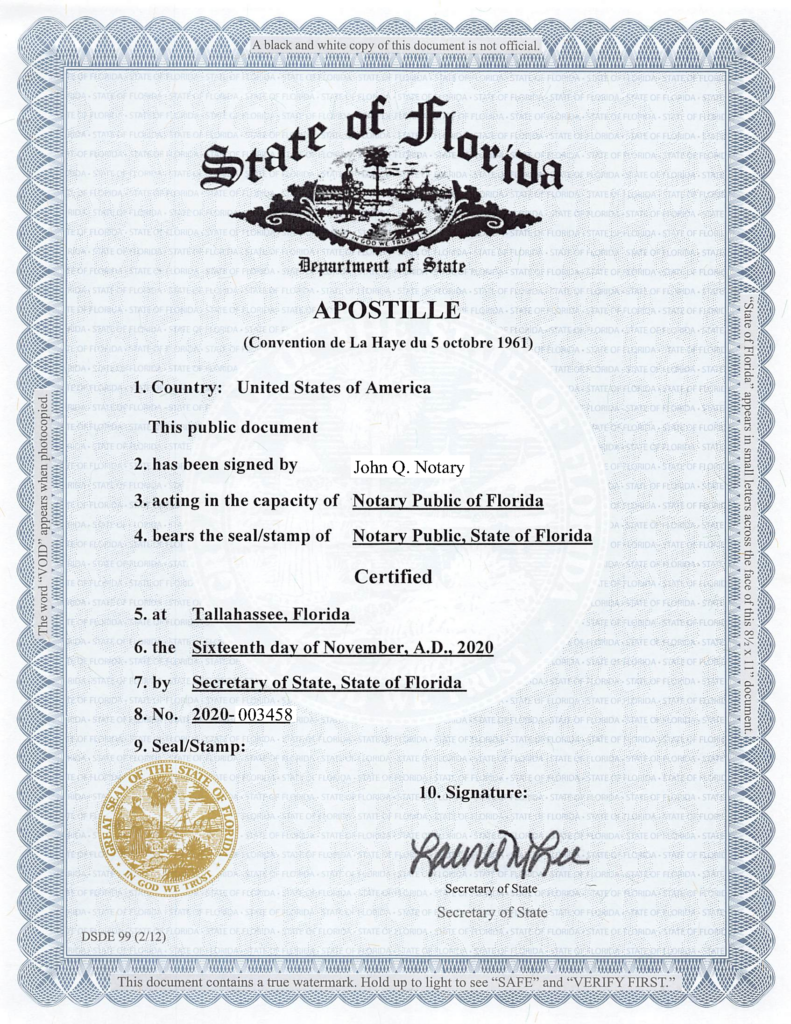
An apostille is a standardized certificate issued by a government authority that verifies the authenticity of a public document. It was created by the Hague Convention of 1961 to simplify the process of using official documents across international borders. Over 120 countries recognize apostilles, including every country in South America.
When you get your birth certificate apostilled, a government office in the country that issued the birth certificate attaches a separate page (or stamp) confirming that the document, the signature on it, and the seal are genuine. That’s all it does. It doesn’t translate the document. It doesn’t certify that the information is correct. It just confirms that the document itself is real and was issued by a legitimate authority.
Think of it as a trust bridge between two countries. Paraguay’s immigration office has no way to verify whether your birth certificate from Ohio or London is real. The apostille is the verification.
Why You Need an Apostilled Birth Certificate for Residency
Every South American country requires proof of identity and nationality as part of a residency application. Your birth certificate is the primary document that establishes both. But a foreign birth certificate means nothing to a government office in Asuncion or Buenos Aires unless it has been authenticated for international use.
The apostille is that authentication. Without it, immigration authorities will reject your application. There are no exceptions and no workarounds. You either have an apostilled birth certificate or you don’t have a valid application.
In most South American countries, the apostilled birth certificate is also required for obtaining a national ID card (like Paraguay’s cedula), opening bank accounts as a foreign resident, registering property, and other legal processes beyond just the initial residency application. It’s a foundational document for your entire legal life in the country.
How to Get Your Birth Certificate Apostilled
The apostille must be issued by the country that issued your birth certificate. You cannot get a US birth certificate apostilled in Paraguay. You cannot get a British birth certificate apostilled in Argentina. It has to be done at home, before you leave.
For Americans

In the United States, birth certificates are issued by individual states, and the apostille comes from the Secretary of State’s office in the state where your birth certificate was issued. If you were born in California, you go through the California Secretary of State. Born in Texas, you go through Texas.
The process is straightforward. You request a certified copy of your birth certificate from the state’s vital records office (if you don’t already have one), then submit it to the Secretary of State with an apostille request form and the processing fee. Most states charge between $5 and $40 per document. California charges $20. New York charges $10. Processing times range from same-day for walk-in requests to two or three weeks by mail.
One critical detail: you need the long-form birth certificate, not the short form. The short-form or “abstract” version that some states issue will be rejected by South American immigration offices. Make sure you have the full certified copy with all the details: parents’ names, hospital, city, county, the works.
If you need it fast, many states offer expedited processing for an additional fee, and there are third-party apostille services that will handle the entire process for you. These services typically charge $100 to $200 on top of the state fee and can turn it around in a few business days.
For Europeans
The process varies by country, but the concept is the same. You get the apostille from the government authority in the country that issued your birth certificate.
In the UK, the Foreign, Commonwealth and Development Office (FCDO) handles apostilles. The fee is currently 45 GBP per document, and processing takes about two to three weeks by post. You can also apply online.
In Germany, the process varies by state (Bundesland) because different authorities issue different documents. You’ll need to contact the authority that originally issued your birth certificate to find out which office handles apostilles in your case.
In France, apostilles are issued by the Cour d’appel (Court of Appeal) in the jurisdiction where the document was issued.
One note for EU citizens: within the EU, many public documents can be used across member states without an apostille thanks to EU Regulation 2016/1191. But that regulation only applies within the EU. When you’re taking documents to South America, you still need the full apostille.
For Canadians, Australians, and Others
Canada, Australia, New Zealand, South Africa, and most other English-speaking countries are all Hague Convention members. The process is similar: get a certified copy of your birth certificate and submit it to the designated government authority for an apostille. In Canada, that’s Global Affairs Canada. In Australia, it’s the Department of Foreign Affairs and Trade (DFAT). Costs and timelines vary, but the process is the same everywhere.
Need help bundling documents for South American residency? We get clients their full residency package, end to end, including document apostille bundling, in-country sworn translation, and submission to immigration. Reach out to us here.
What Each Country Requires: The Differences That Matter
Every country on this list requires an apostilled birth certificate. But the details around translation, validity periods, and additional steps vary. This is where people get tripped up.
Paraguay
Paraguay requires an apostilled birth certificate as part of both the residency application (filed at Migraciones) and the cedula application (filed at Identificaciones). The document must be translated into Spanish by a certified translator. Paraguay is particular about the long-form birth certificate. The short-form abstract will be rejected.
Paraguay does not impose a strict expiration window on the apostille itself, but immigration offices generally expect documents to be recent. Getting your apostille within six months of your application is the safe play. The translation must be done by a Paraguayan certified translator or a translator recognized by the Paraguayan authorities.
Argentina
Argentina requires the apostilled birth certificate as part of all residency applications filed with the Direccion Nacional de Migraciones. The document must have a sworn Spanish translation done by a traductor publico (sworn translator) registered in Argentina. You cannot use a translation done in the US or Europe. It has to be an Argentine sworn translator.
Argentina is also strict about the legalization chain. The apostille must be present, the translation must be sworn, and everything needs to be in order before you submit. If any piece is missing, the application gets kicked back. No partial submissions.
Brazil
Brazil has been a Hague Convention member since 2016, so apostilled documents from other member countries are accepted without embassy legalization. Your apostilled birth certificate must be translated into Portuguese by a tradutor juramentado (sworn public translator) registered with a Brazilian Junta Comercial. This is a specific legal designation in Brazil and you cannot substitute a regular translator.
Brazil’s process is otherwise similar to the others. The apostille authenticates the document, and the sworn translation makes it legally readable. Both are required for any residency or visa application.
Uruguay
Uruguay requires the apostilled birth certificate to be translated into Spanish and, in some cases, legalized by the Uruguayan consulate in your home country before submission. This is an extra step that the other countries on this list don’t always require.
Uruguay also requires you to register your foreign birth certificate with the local civil registry (Registro Civil). This process creates a Uruguayan record of your birth based on the information in your foreign certificate. It’s an additional bureaucratic step, but it’s required for residency and for most other legal processes in the country.
How Long Does an Apostille Last
Technically, an apostille does not expire. Once it’s issued, it remains a valid authentication of the document it’s attached to. The Hague Conference, which created the apostille system, has confirmed this.
In practice, though, South American immigration offices often expect documents to be “recent.” The apostille itself doesn’t have a shelf life, but the underlying document might. A birth certificate is a static document (the facts on it don’t change), so it generally doesn’t have the same freshness concerns as, say, a criminal background check.
That said, the safe practice is to get your apostille within six months of when you plan to submit your residency application. Some immigration officers may push back on documents that are several years old, even if there’s no written rule against it. Getting it done recently avoids any possible issue.
Criminal background checks are different. Most countries require those to be issued within three to six months of the application date. So if you’re getting your birth certificate apostilled, do your background check and its apostille at the same time. That way everything lines up.
What to Do With Your Apostilled Birth Certificate
Once you have your apostilled birth certificate in hand, it goes into your residency application package along with your other documents: passport, criminal background check (also apostilled), proof of address, passport photos, and whatever else the specific country requires.
If you’re working with a lawyer or immigration service, you hand the apostilled birth certificate to them and they handle the rest. They’ll arrange the certified translation in country, compile your document package, and submit it to the immigration office on your behalf.
If you’re doing it yourself, you’ll need to find a certified or sworn translator in the destination country, get the translation done, and then submit everything together according to that country’s process.
Either way, keep the original apostilled document safe. Immigration offices in South America sometimes ask for the original at different stages of the process. Make copies, but always have the original available.
Other Documents You’ll Probably Need Apostilled
While you’re getting your birth certificate apostilled, you should get your other documents done at the same time. The most common documents that need apostilles for South American residency are your criminal background check (FBI report for Americans), your marriage certificate (if applicable and if your spouse is applying with you), and in some cases, a certificate of no criminal record from your state or local police.
Bundling everything together saves time and money, especially if you’re using an expediting service. One trip to the Secretary of State’s office or one shipment to a service provider is a lot better than doing it three separate times because you forgot a document.
Common Mistakes That Stall the Process
Showing up without an apostille. This is the number one mistake. People assume they can get it done abroad or that a notarized copy is good enough. It’s not. The apostille has to come from your home country, period.
Using the short-form birth certificate. Several US states issue a short-form or abstract birth certificate by default. South American immigration offices require the long-form certified copy with full details. If you’re not sure which one you have, check whether it lists both parents’ names, the hospital, and the city of birth. If any of that is missing, get the long form.
Getting the translation done in the wrong country. Argentina requires a sworn translation done by an Argentine traductor publico. Brazil requires a Brazilian tradutor juramentado. A translation done at a service in Miami won’t be accepted. Get the translation done in the country where you’re applying.
Waiting until the last minute. Apostille processing can take anywhere from same-day to three weeks depending on the state or country. If you’re flying out next week and haven’t done your apostille yet, you’re either paying for expedited processing or you’re pushing your residency timeline back. Do this early.
Forgetting the background check. Your birth certificate isn’t the only document that needs an apostille. The criminal background check needs one too, and it has a shorter validity window. If you apostille your birth certificate but forget the background check, you’ll need to do a second round later.
Every Country Has Its Own Process
The apostille is just one piece of the residency puzzle, but it’s the piece that catches people off guard because it has to be done before you leave home. Once you’ve landed in South America without it, your options are limited to having someone back home handle it and ship it to you, which adds weeks or months to your timeline.
Get it done early, get the right version of your birth certificate, and bundle all your documents together so you only go through the process once.
We get clients residency in Paraguay, Argentina, Brazil, Uruguay, and beyond, with documents apostilled, translated in country, and submitted to immigration. Reach out to us here to get started.