Cost of Living in Buenos Aires for Americans (2026)
Buenos Aires has a reputation for being cheap. A few years ago, that reputation was earned. The blue dollar gap made everything absurdly affordable for anyone holding USD. In 2026, that gap is mostly gone. The rates have converged, prices have adjusted, and Buenos Aires is no longer the $800 a month paradise that some blogs still advertise.
It is still affordable. Very affordable compared to any major US city. But the numbers have shifted, and if you show up expecting 2022 prices you are going to be surprised. I spent a month in Buenos Aires in April 2026 and tracked what I actually spent. This is what the city costs right now.
The Short Version
A single person living comfortably in a good neighborhood in Buenos Aires can expect to spend $1,800 to $2,800 per month. That gets you a furnished apartment in Palermo or Recoleta, eating out regularly, Ubers around the city, a gym membership, and a social life. You are not budgeting. You are living well.
If you are more careful with money, cooking at home most nights and choosing restaurants selectively, you can bring that down to $1,400 to $1,800. Below $1,400 is possible but you are making real tradeoffs on where you live or how often you go out.
A couple can live comfortably on $2,500 to $3,500 per month. The big expenses (rent, utilities, internet) do not double when you add a second person. Food and entertainment go up, but not by as much as you would think.
Rent
Rent is the biggest line item and also the most stable part of your budget. This is important because Buenos Aires has always been an economic roller coaster. The peso swings, inflation moves in waves, and restaurant prices can shift noticeably over a few months. But rent, especially for furnished apartments priced in dollars, has stayed remarkably consistent.
A furnished one-bedroom apartment in a great neighborhood runs $600 to $1,100 per month. That range covers everything from a solid studio in Villa Crespo to a modern one-bedroom with a balcony in Palermo Soho. At the top end you are getting a newer building, maybe a doorman, good natural light, and a location within walking distance of everything.
Here is what each neighborhood looks like for rent in mid-2026:
Palermo (Soho, Hollywood, Chico). The default expat neighborhood and for good reason. Walkable, full of restaurants and cafes, safe, and well connected. Furnished one-bedrooms run $700 to $1,100. Studios from $500. You pay a premium for Palermo but you get the most convenient daily life.
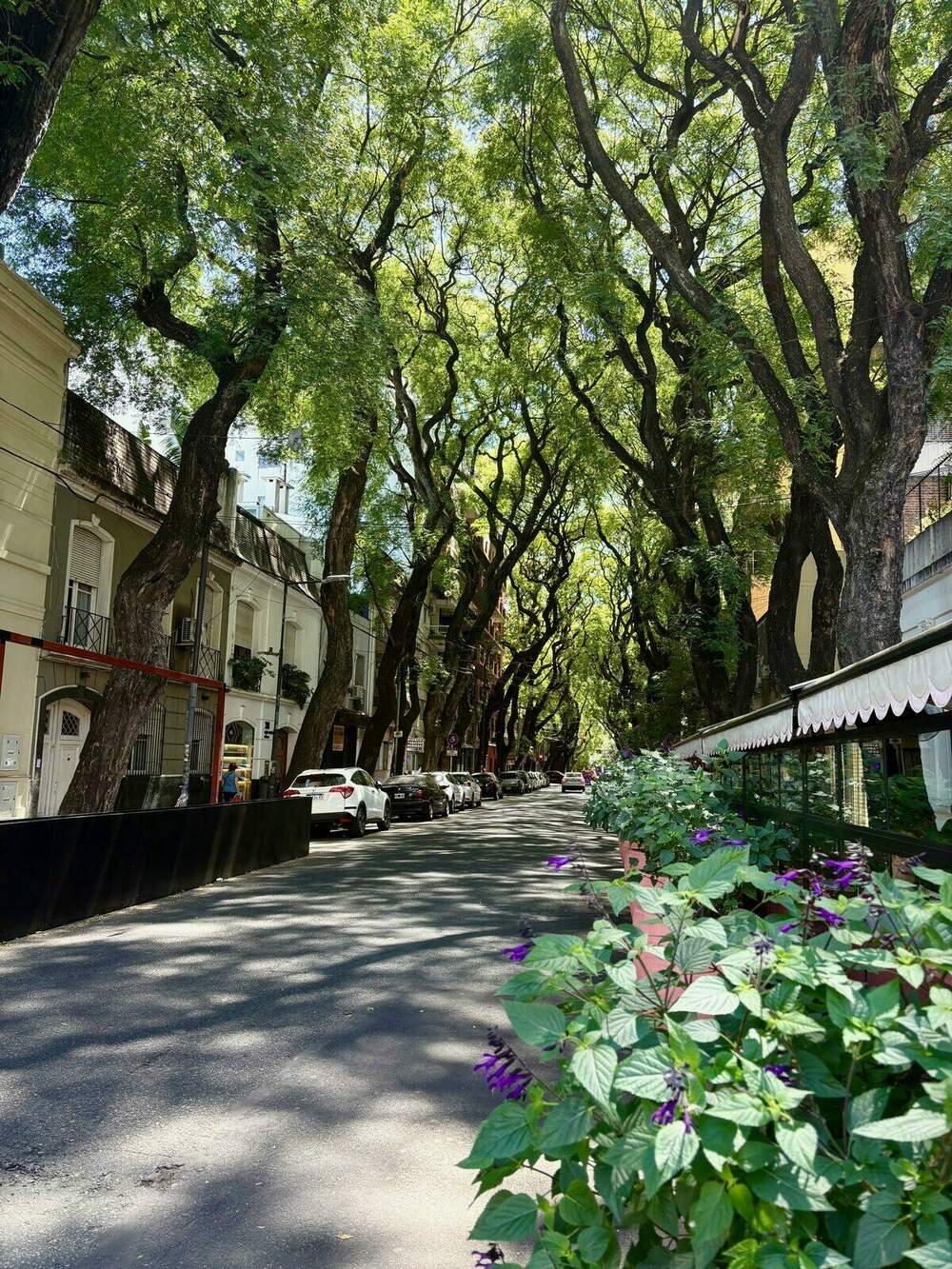
Recoleta. More traditional, beautiful architecture, wide tree-lined streets. Slightly less nightlife than Palermo but arguably more elegant. Rent is comparable, sometimes a touch less. Furnished one-bedrooms $650 to $950.
Belgrano. Quieter, more residential, popular with families. Good restaurants, less tourist traffic. Furnished one-bedrooms $550 to $850. Best value for space.
Villa Crespo and Colegiales. These neighborhoods border Palermo and offer similar walkability at lower prices. $500 to $800 for a furnished one-bedroom. If you do not need to be in the center of Palermo, these are the smart play.
San Telmo. Historic, cobblestone streets, tango culture. More bohemian. Rent is lower ($450 to $700) but the neighborhood is rougher at night and less convenient for daily errands.
Most expat rentals in Buenos Aires are temporary contracts paid in USD. You will find them on ZonaProp, ArgenProp, and through local Facebook groups. If you have an Argentine DNI, you can access peso-denominated long-term contracts which are significantly cheaper, but most new arrivals start with temporary rentals.
Utilities (electricity, gas, water) run $30 to $80 per month depending on the apartment and the season. Internet is $20 to $35 for fiber. These costs are negligible.
Food and Dining
This is where Buenos Aires gets interesting and where the roller coaster economy shows up most. Restaurant prices have moved around over the past few years as inflation and currency adjustments ripple through the economy. But as of mid-2026, here is where things stand.
Lunch out runs about $10. That gets you a menu ejecutivo at most restaurants, which is a set lunch with a main course, a drink, and sometimes a starter or dessert. These lunch deals are everywhere and they are one of the best values in the city.
Dinner out runs about $20 per person at a sit-down restaurant. A proper steak dinner with wine at a good parrilla can push $30 to $40. High-end restaurants in Palermo can go higher, but you have to try pretty hard to spend more than $50 per person in Buenos Aires unless you are at a tasting menu place.
Coffee is $2 to $4. A medialunas and coffee breakfast at a cafe runs $5 to $7.
Groceries are roughly comparable to a cheap US city. Think somewhere between a Walmart in a mid-size American city and a slightly nicer grocery store. You are not getting Manhattan prices, but you are also not getting the ultra-cheap produce prices that some other South American countries offer. Budget $250 to $400 per month for groceries depending on how much you cook and whether you buy imported products.
The quality of food in Buenos Aires is outstanding. The beef is the best in the world, full stop. The wine is excellent and cheap by international standards. A very good bottle of Malbec costs $5 to $10 at the store. Fresh pasta, empanadas, and bakery items are everywhere and affordable. You eat well here without trying.
If you want to explore Buenos Aires restaurants and the food scene, our full guide to moving to Argentina covers the lifestyle side in more detail.
Transportation
Buenos Aires is a walkable city, especially in Palermo, Recoleta, and Belgrano. You can handle most of your daily life on foot if you pick the right neighborhood.
When you need a ride, Uber and Cabify are both widely available. A typical Uber across the city runs $5 to $7. A longer ride from Palermo to the airport (Aeroparque, the domestic terminal) is about $8 to $12. Rides to Ezeiza (the international airport, much further out) run $25 to $35.
The subway (Subte) costs about $0.30 per ride and covers the central parts of the city well. Buses are even cheaper. If you are comfortable navigating public transit, your monthly transport costs can stay under $30. Most expats use a mix of walking, Uber, and occasional subway rides and spend $80 to $150 per month on transportation.
You do not need a car in Buenos Aires. Unlike Asuncion or most other South American cities, BA was built for walking and public transit. A car is more of a hassle than a help.
Healthcare
Private healthcare in Buenos Aires is excellent and affordable. A prepaga (private health insurance plan) runs $50 to $150 per month. OSDE and Swiss Medical are the two most popular providers. A doctor visit costs $20 to $40 out of pocket if you do not have insurance.
The public healthcare system is free for residents, and the quality at the major public hospitals in Buenos Aires is solid. Most expats opt for a prepaga because the private system is faster and more comfortable, but the public system is a real safety net, not just something that exists on paper.
Dental work is roughly 50% to 70% cheaper than the US. A cleaning runs $30 to $50. A crown might be $200 to $400 compared to $800 to $1,500 in the US.
The Roller Coaster Factor
Buenos Aires has always had a volatile economy. The peso moves, inflation adjusts, and prices shift. This has been true for decades and it will probably be true for decades more. If you are waiting for Argentina’s economy to “stabilize” before moving, you will be waiting forever.
Here is what actually matters for expats in 2026: your big fixed expenses are stable. Rent is priced in dollars and has not moved dramatically. Uber rides are cheap and consistent. Internet and utilities are negligible. These are the costs that define your monthly budget, and they are predictable.
The variable stuff, restaurant meals, groceries, entertainment, moves around more. Over the past year, restaurant prices have crept up as the blue dollar gap closed and the economy adjusted. But we are talking about fluctuations of a few dollars per meal, not dramatic swings that blow up your budget.
The bottom line is that Buenos Aires remains one of the best value propositions for Americans looking at major world cities. You are getting a European-quality city with world-class food, culture, architecture, and nightlife for a fraction of what you would pay in any comparable city in the US or Europe. The exact numbers shift from quarter to quarter, but the value equation has not changed.
How Buenos Aires Compares
vs. Asuncion, Paraguay. Asuncion is 30% to 40% cheaper across the board. Rent, food, and services are all significantly lower. But Buenos Aires has a lifestyle that Asuncion simply cannot match. The restaurants, the nightlife, the walkability, the cultural scene. Most people who can afford Buenos Aires prefer it for quality of life. A lot of expats in the region get Paraguay residency for the tax advantages and spend their time between both cities.
vs. Montevideo, Uruguay. Montevideo is more expensive than Buenos Aires with a smaller city feel. Food and rent are both higher. Montevideo is a great city but it does not offer the same depth of restaurants, nightlife, or cultural activity that BA does.
vs. US cities. Buenos Aires costs roughly 40% to 60% less than comparable US cities. A lifestyle that would cost $4,000 to $5,000 per month in Miami or $6,000+ in New York runs $2,000 to $3,000 in Buenos Aires with similar or better quality of daily life.
We wrote a detailed look at the Buenos Aires real estate market if you are thinking about buying rather than renting.
Want to make the move to Buenos Aires? We get Americans their Argentine residency, handle the apartment search in Palermo or Recoleta, and make the whole relocation process straightforward from paperwork to move-in. Reach out to us here.
Monthly Budget Summary
Here is a realistic monthly budget for a single person living comfortably in a good Buenos Aires neighborhood in mid-2026.
Rent (furnished one-bedroom, good neighborhood): $600 to $1,100. Utilities and internet: $50 to $100. Groceries: $250 to $400. Dining out (lunch and dinner several times per week): $300 to $500. Transportation (Uber, subway, walking): $80 to $150. Healthcare (prepaga): $50 to $150. Entertainment, gym, social: $100 to $200. Phone plan: $10 to $20.
Total: $1,440 to $2,620 per month.
The midpoint of that range, around $2,000 per month, is what most American expats actually spend. You are living in one of the great cities of the world for the price of a studio apartment in a mid-tier US city.
Getting Started
The first step is booking a flight to Buenos Aires (Ezeiza International Airport, EZE). Americans get 90 days visa-free on arrival. Use that time to explore neighborhoods, set up your life, and start the residency process if you plan to stay. Our full guide to moving to Argentina as an American covers residency pathways, citizenship, taxes, and everything else you need.
We get clients set up with Argentine residency, find furnished apartments in Palermo or Recoleta, and handle the entire relocation from paperwork to move-in. Reach out to us here to get started.