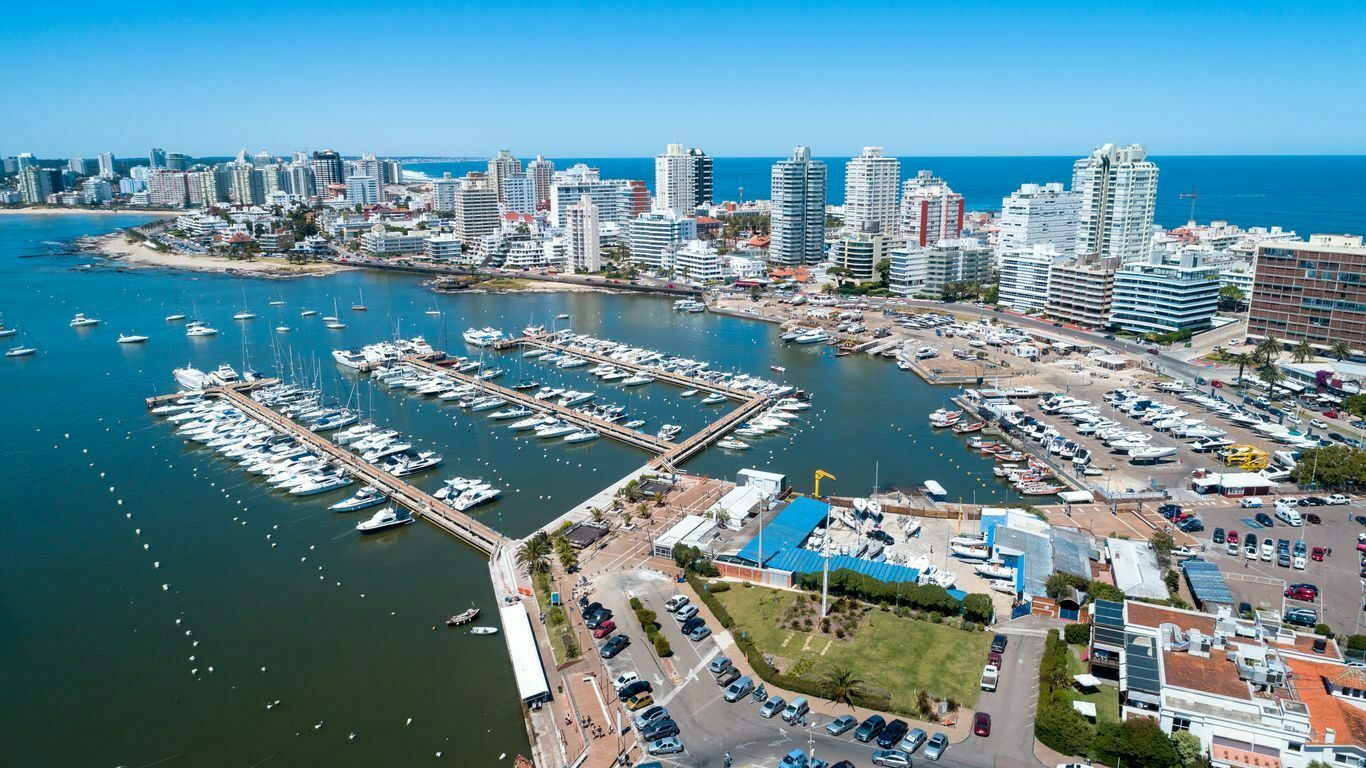
Argentina vs Uruguay Residency: Which Plan B Fits You?
People ask me this all the time, and they are usually looking for a winner. There is not one. Argentina vs Uruguay residency is not really a competition. They solve opposite problems, and the deciding question is simple: do you want a Plan B in your back pocket, or are you actually moving and want a passport as fast as possible?
Here is the full 2026 picture on both.
| Uruguay | Argentina | |
|---|---|---|
| Residency type | One permanent residency for everyone. No visa categories. | Temporary residency via a rentista (passive income) or student visa. |
| Time to residency | In-process cédula from day one; permanent residency in 6 to 12 months. | Temporary certificate (precaria) within a few weeks; full temporary residency in a few months. |
| Presence to obtain it | None, in current practice (discretionary, not guaranteed). | Apply in-country or at a consulate; no long stay required to obtain it. |
| Path to passport | Naturalize after 3 years with family or 5 years single, 183+ days a year. | Citizenship after 2 years of continuous residence. |
| Passport strength | Visa-free to 150+ countries. | Visa-free to around 170 countries. |
| Tax | 11-year holiday on foreign income (requires 183+ days a year or roughly USD 2M). | Worldwide income taxed. |
| Cost | About $2,850 per person. | $2,000 residency / $5,000 full passport plan. |
| Best for | A Plan B you hold without moving. | Moving now, fastest passport. |
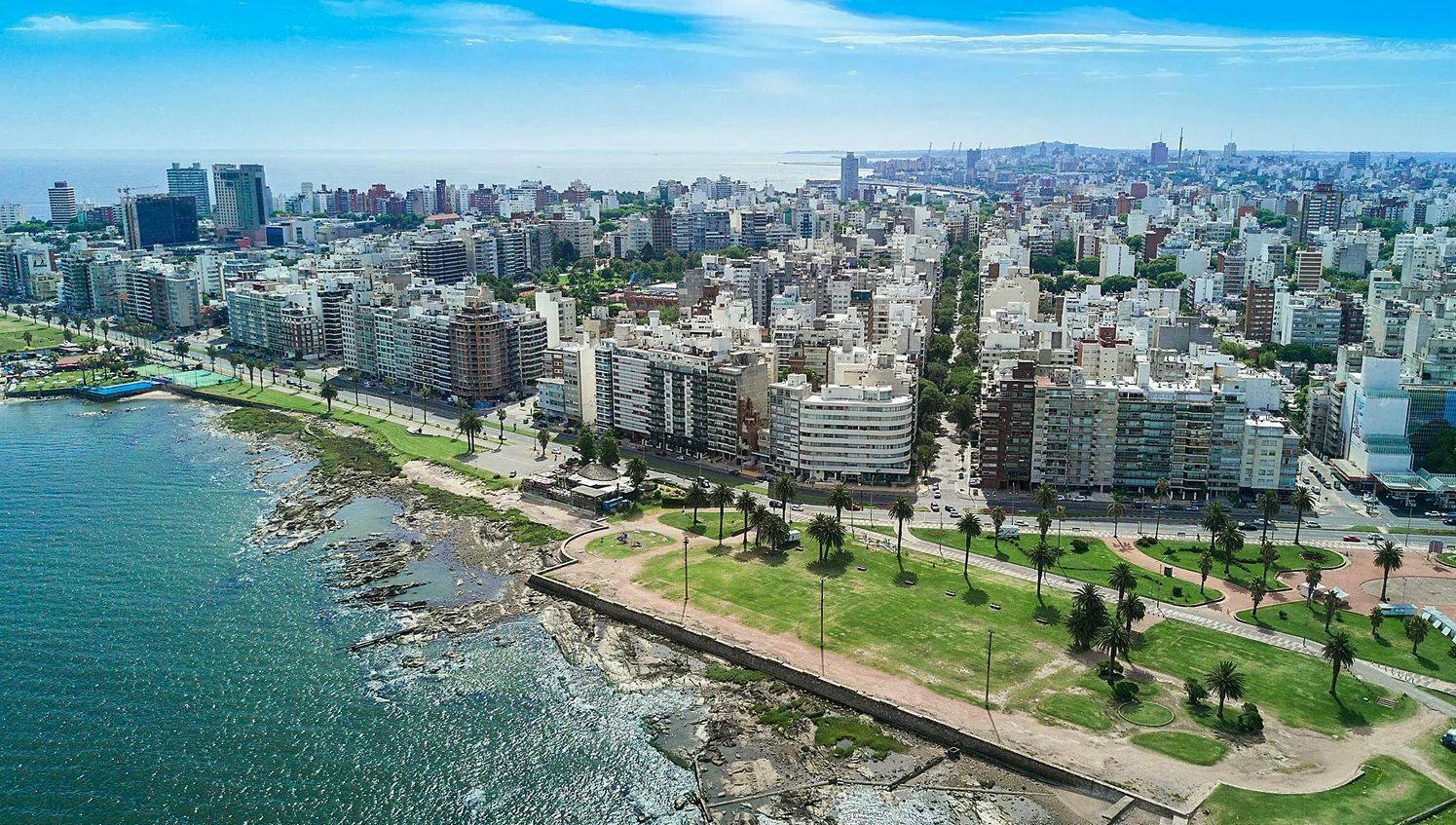
Uruguay: the back-pocket Plan B
Uruguay’s biggest advantage is that you do not have to move there to secure it.
It goes straight to permanent residency. There is no temporary tier to renew every year. You apply once, and what you are applying for is permanent from day one.
The bigger development is around presence. The law expects “intent to reside,” but in current practice, firms here are seeing applicants approved without spending the processing period in-country. You fly to Montevideo, spend roughly three days handling your filing and immigration hearing, receive a temporary cédula on the spot, and then you are free to leave. Six to twelve months later, your permanent residency comes through. This is practice, not written law, and nothing about an outcome with a migration office is ever guaranteed. But it is why Uruguay has become the cleanest back-pocket residency in South America right now.
Once approved, maintenance is light. You only need to enter Uruguay once every three years to keep it alive.
That is the core proposition: secure it now, move whenever you are ready, or never, and still hold the status. I wrote a full breakdown of how Uruguay’s permanent residency works including the migration shift and document requirements.
The passport, if you want it
Uruguay’s citizenship is a separate, slower track, and this is where presence starts to matter.
You can naturalize after three years if you have family with you, or five years single. That clock requires real residence: 183 or more days per year in the country, plus a basic conversational Spanish interview. Leaving for more than six consecutive months resets it.
One detail most people miss: Uruguay grants naturalized people “legal citizenship,” which is distinct from the “natural” citizenship of those born there. You get a real Uruguayan passport with visa-free access to over 150 countries, but it is worth knowing the two legal categories are not identical under Uruguayan law.
Tax
Uruguay offers an 11-year tax holiday on foreign income. Zero percent on foreign dividends, interest, capital gains, and foreign rental income for the year you become a tax resident plus the following ten. After the 11 years, there is a five-year transition at 6%, then the standard 12% rate applies.
The catch follows the same theme: the holiday requires real tax residency. That means 183 or more days per year in Uruguay, or a substantial real estate investment (the 2026 rules raised this threshold to roughly USD 2 million). The residency itself asks nothing of your time. The tax benefit asks for either your presence or serious capital. Do not confuse the two. Holding permanent residency without spending 183 days does not give you the tax holiday.
We share news and updates on residency & citizenship across South America in our flag-theory focused newsletter. Subscribe here:
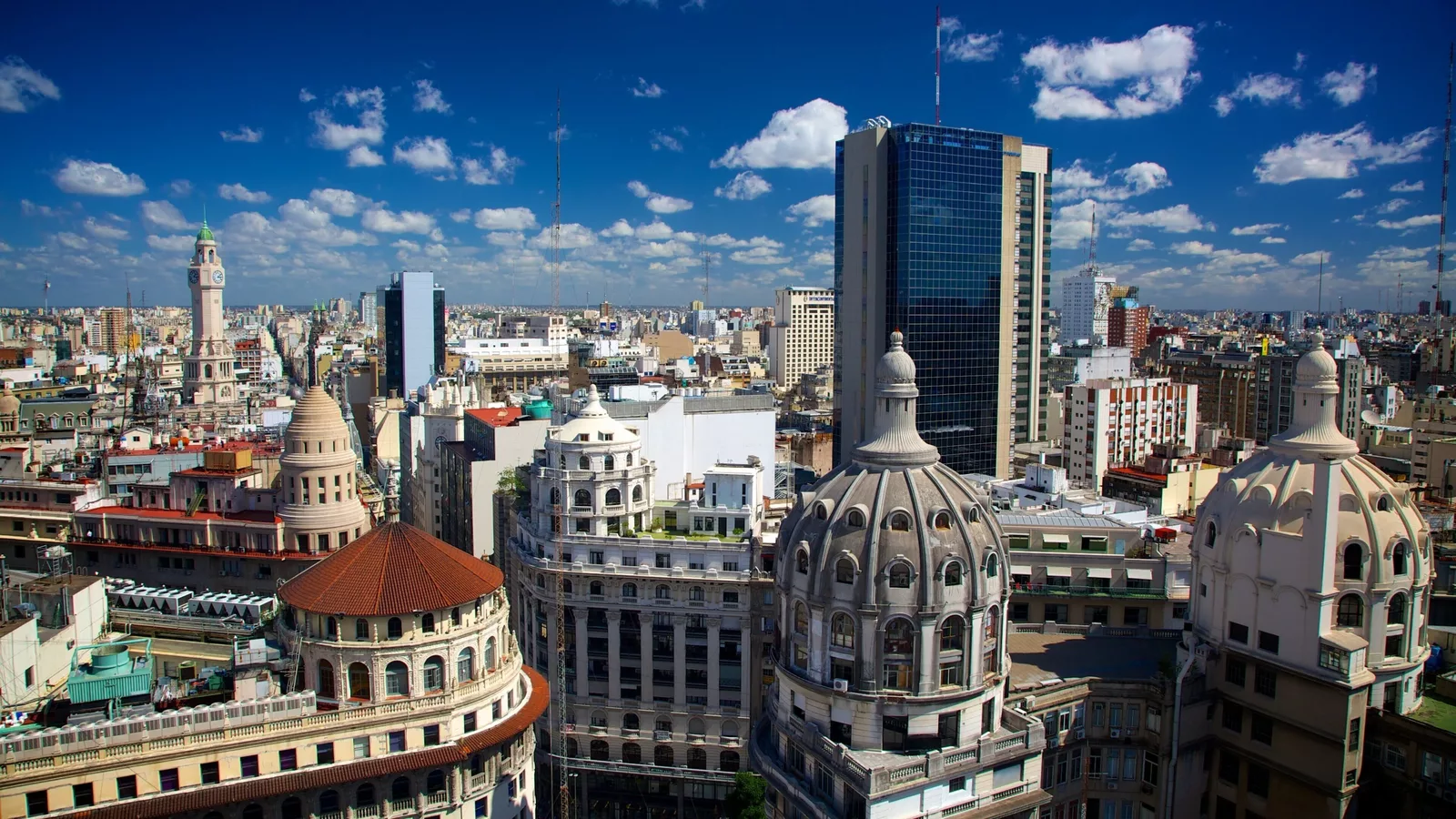
Argentina: the fast passport for movers
Argentina is for the person or family relocating now who wants a strong passport, fast.
The path is unusually direct. You get temporary residency, and the two-year clock to citizenship starts the day it is granted. There is no permanent residency step in between. Both temporary and permanent count toward the timeline. At the end of two years you apply for naturalization, and you finish holding a passport with visa-free access to around 170 countries, one of the fastest naturalization timelines in the world. Argentina allows dual citizenship, so you keep your existing passport.
After filing, you receive a temporary certificate (precaria) within a few weeks that lets you reside legally right away. Full temporary residency is typically granted within a few months.
The catch
Decree 366/2025 changed the rules. It now requires those two years of residence to be continuous, meaning you cannot leave the country during that window. The process also moved to the migration office and has been digital since October 2025.
Important context: the decree is being challenged in court. A ruling has already gone against parts of it, and the continuous-presence requirement may shift. For now, plan as if Argentina rewards people who are actually building a life there, not collecting a passport from a distance.
Tax
Unlike Uruguay and Paraguay, Argentina taxes residents on worldwide income. This is the trade-off for the fast passport.
In practice, enforcement on foreign-source income for newer residents has historically been uneven. But I tell everyone the same thing: structure this properly with a tax professional before you move, not after. Do not build a plan around assuming non-enforcement will continue. If you are earning significant foreign income, the tax exposure is real and should be factored into your cost-benefit calculation alongside the passport value.
The practical details, side by side
What you need to apply
The document sets are similar, but the details differ.
Uruguay — from the standard process our Montevideo team runs:
- Passport scan (this alone gets you the temporary in-process ID)
- Apostilled or legalized clean criminal records from your country of birth and every country you have lived in over the last 5 years
- Apostilled birth certificate
- Proof of income, drafted with a Uruguayan notary; you need a fixed, stable income to qualify
- Health check done in Uruguay, plus vaccination records
Argentina:
- Apostilled birth certificate
- Apostilled criminal records
- Proof of income showing you can support yourself. The rentista category requires stable monthly passive income equal to 5 times Argentina’s minimum wage, which works out to roughly USD 1,300 per month at current rates, though in practice you want to show closer to USD 2,000 per month for a smooth approval. The amount auto-adjusts as the minimum wage changes.
How you qualify
Uruguay has a single residency that works for everyone. There is no rentista, student, or category system to choose from. One path for all.
Argentina runs through a visa category. The two most people use are the rentista (passive income) visa and the student visa. We put most clients through one of those.
Cost
Uruguay: about $2,850 per person, fully handled, covering legal fees, government filings, and administrative costs.
Argentina: $2,000 for residency only (rentista or student visa), or $5,000 for the full passport plan start to finish.
Bringing your family
Both Argentina and Uruguay process every family member as a separate, individual application, at the per-person cost. There is no discounted family bundle in either country.
So, which is you?
If you want a Plan B you can secure now and hold without uprooting your life: Uruguay. Get the permanent residency, keep it alive with one entry every three years, and move if and when you are ready.
If you are moving now and want the fastest route to a strong passport: Argentina. Go in understanding the continuous-presence rule and the fact that it is currently being litigated.
Both are excellent. They are just built for opposite situations.
If neither fits
If you want even lower physical presence than either of these, or a cheaper and faster passport track, Paraguay and Bolivia are worth a look. I broke down Paraguay’s residency costs in detail here.
We get clients residency in both Argentina and Uruguay, working directly with our teams in Buenos Aires and Montevideo. Reach out to us here to get started.