Uruguay Permanent Residency Without Living There (2026)
Something has shifted in Uruguay’s immigration process that most people have not heard about yet. Over the past year, Uruguay’s migration office has been approving permanent residency applications from people who are not physically present in the country during the processing period. Not temporary residency. Permanent residency. From day one.
This is not a new law. It is not a publicly announced policy change. It is a practical shift in how Uruguay’s immigration office is handling applications. The formal requirement on the books still says applicants should demonstrate “animo de permanencia,” which translates to a genuine intention to reside. In practice, the immigration office has stopped closely examining travel records for residency applicants. Applications are being filed, applicants are leaving the country, and the residencies are getting approved.
I work with a well-established law firm in Montevideo that has been processing these applications and getting approvals consistently. They handle about 100 residencies per year, mostly for American and European clients, and they have been seeing this shift play out across every recent application. It is real. It is happening now. And it makes Uruguay one of the most compelling residency options in South America for anyone who wants a Plan B without relocating.
How the Process Actually Works

Here is what it looks like in practice.
You fly to Montevideo. You spend about three days on the ground to attend your residency hearing at the immigration office and complete the in-person requirements. During that visit, you file your application, attend the hearing, and receive a temporary Uruguayan cédula de identidad that is valid for two years. This temporary ID lets you live, work, and invest in Uruguay immediately.
Then you leave. You go back to wherever you live. The firm handles the rest of the process while you are gone.
The permanent residency is typically granted within six to twelve months from the date all documents are submitted. Once approved, you receive your definitive cédula. And once you have permanent residency, the only requirement to maintain it is to enter Uruguay at least once every three years. One day, once every three years. That is it.
Uruguay only has one type of residency: permanent. There is no temporary residency phase that you have to graduate from. You apply directly for permanent residency from the start. The temporary ID you receive at filing is just your in-process document while the application is reviewed. When it is approved, you are a permanent resident.
What Documents You Need
The document requirements are straightforward but do involve some apostille work.
Your passport. Apostilled criminal background records from the country you were born in and any country you have lived in for the last five years. Your apostilled birth certificate. Proof of income, which is structured with a Uruguayan notary depending on how your income is set up. This can be remote salary, investment returns, rental income, pension, or other sources. A health check done in Uruguay during your visit. And your vaccination records.
If you need a primer on apostilles and how the process works for South American residency, we covered that in detail in our apostille guide.
The income proof is the one piece that requires some coordination. Your lawyer drafts this with a Uruguayan notary to properly document your income sources. There is no rigid dollar threshold written into law, but in practice you want to demonstrate at least $1,500 per month in stable income to have a clean application.
What It Costs
The total cost for a fully handled Uruguay permanent residency runs approximately $2,850 per person. That breaks down to roughly $2,200 in legal fees for the law firm handling the process, plus about $650 per person in administrative expenses covering the immigration filing fee, cédula appointments, birth certificate registration at the civil registry, notary fees, and translation fees.
That is more expensive than Bolivia residency (approximately $2,000 all-in) and comparable to Paraguay residency ($3,000 to $5,000 all-in). The difference is that Uruguay gives you permanent residency directly, with minimal time in the country, and in one of the most stable and well-regulated countries in South America.
The Tax Angle: Why This Is So Compelling
Here is the part that makes this setup genuinely powerful, and it is the piece most people get wrong when they hear about Uruguay residency.
Having permanent residency in Uruguay does not make you a tax resident. Tax residency is a completely separate trigger. You become a Uruguayan tax resident only if you spend 183 or more days per year in the country. If you spend less than that, you have your permanent residency, your cédula, your legal status, but you are not a tax resident and Uruguay’s tax system does not apply to you.
This means you can hold permanent residency in Uruguay indefinitely, entering the country once every three years to maintain it, without ever triggering tax obligations there. Your tax situation stays wherever you actually live and spend your time.
But here is the optionality. If you ever decide to actually move to Uruguay and spend 183 days in a year, you become a tax resident at that point. And when that happens, you can elect Uruguay’s 11-year tax holiday on foreign-source income.
The 11-year tax holiday works like this. Once you become a tax resident (by spending 183+ days), you can elect a full exemption on all foreign-sourced capital and investment income for the year you become tax resident plus ten additional calendar years. During those 11 years, foreign income is taxed at 0%. After the 11 years, there is a five-year transition period at 6%, and then the standard 12% rate applies.
As of January 2026, the investment-based route to the tax holiday now requires approximately $2 million in Uruguayan real estate. But the physical presence route (183 days per year, no investment required) remains available and unchanged. You just have to actually be in the country.
The combination is what makes this so interesting. You get permanent residency now with three days on the ground. You maintain it forever with one visit every three years. You are not a tax resident, so there is no tax impact. And you have a card up your sleeve: if your situation changes and you want to relocate to a stable South American country with a favorable tax system, you activate the 183-day trigger and start your 11-year clock whenever you are ready. That option never expires as long as you maintain your residency.
For someone who already has tax residency in a favorable jurisdiction like Paraguay (0% on foreign income permanently), Uruguay residency is not about taxes at all. It is about having a second legal home in one of the safest, most stable countries in the region, with zero ongoing cost or obligation.
Why Uruguay Specifically
Uruguay is not the cheapest country in South America. Montevideo costs roughly double what Asunción does. But it has qualities that are hard to find elsewhere in the region.
Stability. Uruguay has the strongest institutional framework in South America. Rule of law, property rights, contract enforcement, and regulatory predictability are all on a different level than most of its neighbors. Banks work. The courts work. The government does not change the rules every time a new president comes in.
Banking. Uruguay has the best banking infrastructure in the region for foreign clients. Banks are internationally connected, comfortable with foreign residents, and experienced handling international transfers. If you want to hold meaningful capital in South America, Uruguay is the obvious choice.
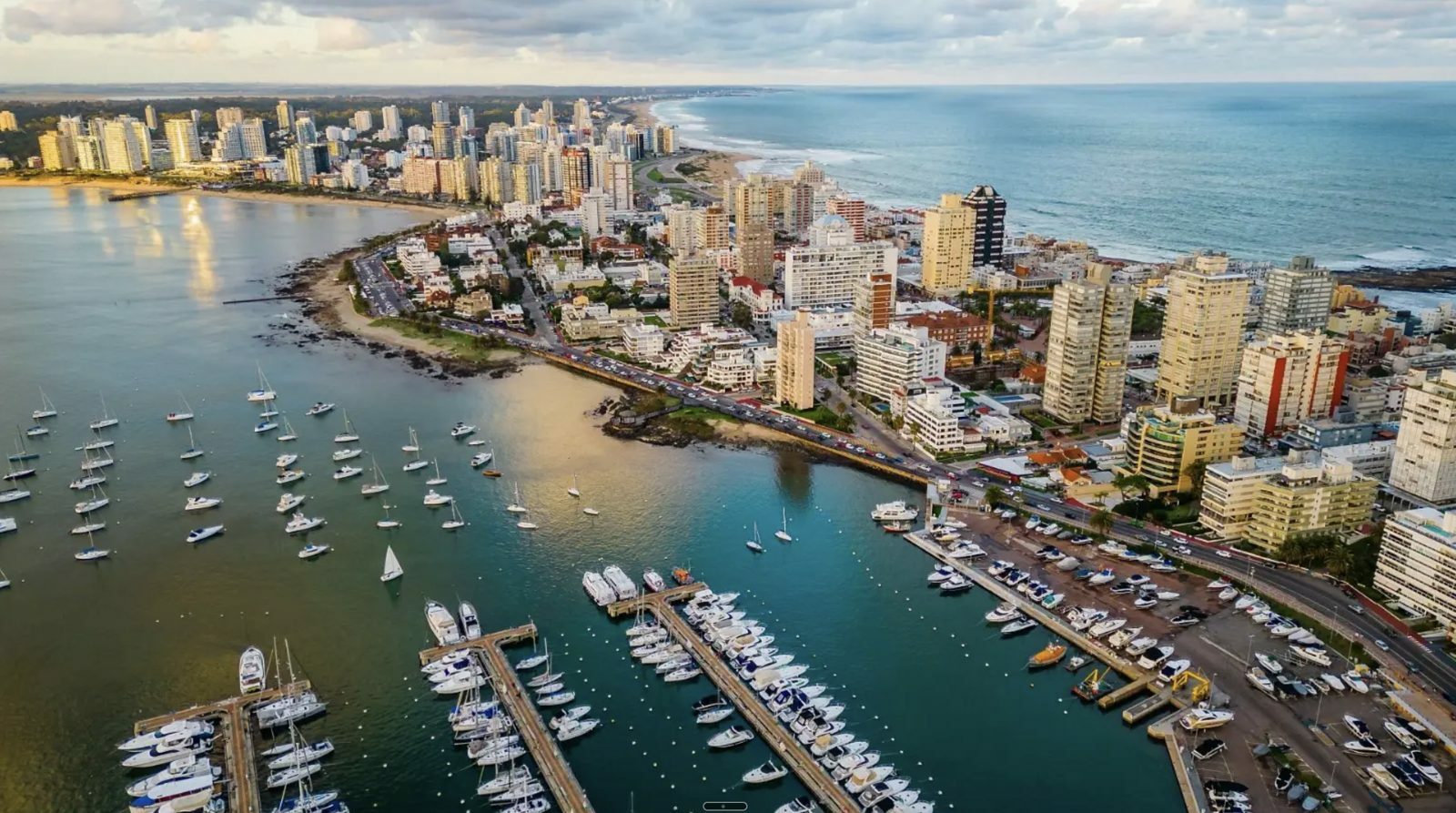
Quality of life. Montevideo is safe, clean, well-maintained, and has a European feel. The Rambla waterfront is one of the best urban spaces on the continent. Punta del Este in the summer is world-class. The country punches well above its weight for a population of 3.5 million.
Citizenship path. Permanent residents can apply for Uruguayan citizenship after three years (if married) or five years (if single). Uruguay allows dual citizenship. A Uruguayan passport provides visa-free access to over 150 countries including the EU.
Want Uruguay permanent residency without uprooting your life? We work with a Montevideo law firm that has been getting consistent approvals on the apply-and-leave basis, with full coordination from document prep to your 3-day trip to filing and follow-up, all in for about $2,850 per person. Reach out to us here.
The Caveats
I want to be direct about what this is and what it is not.
This is a practical shift in how Uruguay’s immigration office is handling applications. It is not a guaranteed policy. The formal rules still reference “animo de permanencia” as a requirement, and approvals are discretionary. The firm I work with has been getting consistent approvals on this basis, but they cannot guarantee that every application filed by someone living abroad will be approved. If the immigration office changes its approach tomorrow, that is within their authority.
If you leave the country for more than six consecutive months during the processing period, the immigration office could require you to return in person to provide additional documentation or clarify your intention to reside.
The applications that are going through cleanly are ones with complete documentation, clear income proof, and professional legal representation. This is not something to attempt on your own with incomplete paperwork and hope for the best. The margin for error is smaller when you are asking for approval from outside the country.
And this could change. Immigration offices in South America adjust their practices regularly. The firm I work with has been doing this for over 20 years and monitors these shifts closely, but nobody can promise that what works today will work in 18 months. If you are interested in this, the smart move is to act while the window is open rather than waiting to see if it stays open.
Who This Is For
This is not for everyone. It is specifically compelling for a few types of people.
People who want a Plan B residency in a stable country without relocating. You live wherever you live. You do your three days in Montevideo. You have permanent residency in one of the best-regulated countries in South America. You maintain it with one trip every three years.
People who are already based in the region and want a second residency for flexibility. If you live in Paraguay or Argentina and want the option to move to Uruguay later, or just want a legal footprint in a second country, this is an easy add.
High-net-worth individuals who want future tax optionality. You get the residency now. If you ever want to activate the tax holiday, you move to Uruguay and spend 183 days. The 11-year clock starts when you are ready, not when you get your residency.
People who want access to Uruguayan banking. A cédula opens doors to the Uruguayan banking system, which is the strongest in the region for international clients.
Getting Started
The first step is getting your documents in order. That means apostilled criminal background checks and an apostilled birth certificate from your home country. If you have lived in multiple countries in the last five years, you need criminal records from each one.
We work directly with a law firm in Montevideo that handles Uruguay permanent residency for foreign clients. They process about 100 residencies per year and have been getting consistent approvals on the apply-and-leave basis described in this article. We coordinate everything from document preparation to your trip to Montevideo to filing and follow-up.
We get clients Uruguay permanent residency on the apply-and-leave basis, working directly with our law firm in Montevideo. Reach out to us here to get started.