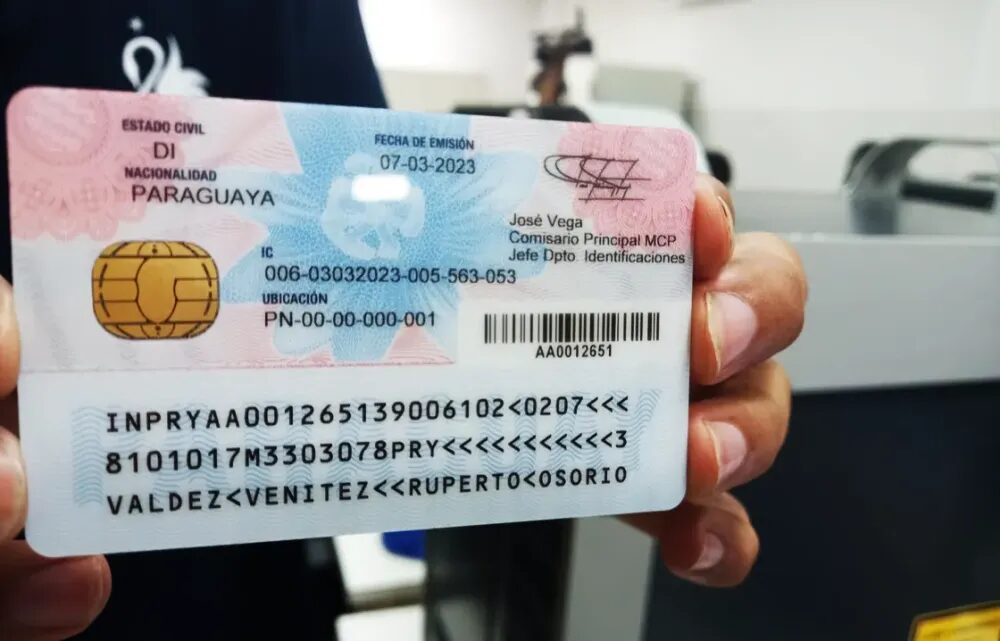
Paraguay Temporary to Permanent Residency: The 2026 Conversion Guide
If you got Paraguay temporary residency during the 2024-2025 wave, your clock is running. Temporary residency is normally granted for up to two years, the conversion window opens 90 days before the expiry date printed on your card, and Paraguay just rewrote the rules for how you prove you deserve the upgrade.
Resolution DNM 407/2026 applies to permanent-residency applications filed from July 6, 2026 onward, under both Law 6984/2022 and the MERCOSUR Residence Agreement. If you file today, you’re filing under rules that are weeks old, and most of what’s written online was published before they existed. Migraciones received 18,071 residence applications in the first quarter of 2026, up 85% from the same period in 2025. Brazilians accounted for 64% of residencies granted in that quarter, with Argentines second. Resolution 407 arrives amid that surge, although its stated purpose is to unify previously scattered solvency rules and make the evidence more verifiable.
Here is how the conversion works now. I run Paraguay residency cases with our legal team in Asuncion, and this is the process as it stands in mid-2026.
The Basics That Didn’t Change
First, check which legal regime is printed on your temporary card. The new solvency rules are the same for both main routes, but the deadlines are not.
Temporary residence under Law 6984/2022. You should file during the three months before your card expires. If the card expires first, Migraciones still allows the permanent conversion during the following 30 days, subject to a late-stay fine. Once more than a month has passed, you can no longer convert directly. Migraciones says you may only request an extension of temporary residence, and only until six months after the original expiry date, again with the applicable fine. Do not plan around this. Put the opening date in your calendar the day you receive your temporary card.
Temporary residence under the MERCOSUR Agreement. This route is stricter. You must apply for permanent MERCOSUR residence during the 90 days before the temporary card expires. If that card expires before you file, Migraciones says you lose the right to convert under the Agreement and must seek a new status under Law 6984/2022. Do not assume the Law 6984 grace period applies to a MERCOSUR card.
The other rule that carries over: temporary residence can be cancelled for an unjustified absence from Paraguay of more than one consecutive year, unless Migraciones authorized the absence. Notice that’s consecutive, not cumulative. A properly registered re-entry interrupts the continuous absence. If you’re running Paraguay as a Plan B and living elsewhere, make sure your return is recorded before a full year passes; do not rely on an unrecorded border crossing.
Permanent status is indefinite. The physical residence card must be renewed every 10 years. Permanent status can be lost after an unjustified absence of more than three consecutive years, unless Migraciones authorizes a longer absence. Your three-year clock toward naturalization starts on the date of the resolution granting permanent residence, not from your original temporary approval. If you plan to pursue citizenship, delaying the conversion also delays the date when you can apply.
One piece of good news: the standard adult conversion file is built mostly in Paraguay, but the checklist depends on your route. Under Law 6984, the published list includes your current home-country ID or passport, Paraguayan cedula, temporary-residence card, evidence of any changed personal or professional details, and four local checks: Antecedentes para Extranjeros, Buena Conducta, Antecedentes Judiciales, and INTERPOL. Under the MERCOSUR route, the published adult checklist is lighter: the temporary MERCOSUR card, current home-country ID or passport, Antecedentes para Extranjeros, and solvency evidence. Neither standard checklist asks an adult to re-apostille a birth certificate or order a new FBI report, although foreign documents may be needed to prove a change, satisfy a particular solvency category, handle a minor’s application, or answer a case-specific request.
What Resolution 407 Changed: Proving You Actually Do Something
Under the prior rules, proving economic solvency for the conversion was often close to a formality. A university degree could carry the file without separate proof that it was currently generating income. The assumption was that a degree holder could obviously support themselves.
That no longer works. Resolution 407 replaces six earlier measures issued from 2024 through early 2026 with one set of rules covering 12 solvency categories: professionals, technicians, employees, independent workers, remote workers and digital nomads, property owners, shareholders and partners, farmers, religious workers, retirees, dependents, and students. Each category has its own required documents. The basic idea is to show current, documented income or resources, not just a credential.
The three categories that matter for most of my readers:
Remote workers and digital nomads. This is the category many readers will use. A Paraguayan RUC is not among the documents listed for this category. Instead, Resolution 407 asks for a work certificate or similar confirmation that supports the employment or service relationship and states the income received and how it is paid. If the evidence was issued abroad, it must be legalized or apostilled and translated into Spanish. A Paraguayan public translator may do the translation. A qualified foreign public translator is also permitted if the translated version is properly apostilled or legalized. Portuguese-language documents issued in Brazil are exempt from translation. So while the base conversion file may need nothing from home, your solvency evidence might. Get it prepared before your 90-day filing window opens, not during it.
Self-employed inside Paraguay. If you are relying on the independent-worker category for local commerce or services, taxpayer registration is now a hard requirement. Migraciones also asks for the last three monthly IVA returns or the last annual IRP return, plus a tax-compliance certificate, with actual movement shown. You cannot get a RUC on Tuesday and file on Friday anymore. If you plan to use monthly IVA returns, activate the RUC early enough to build the required three-month filing history. If you’re in this category and month 18 is approaching without a RUC, move now.
Professionals and employees. A degree is no longer enough on its own. Professionals must also show that they practice the profession and earn money from it. Employees must show a genuine, active employment relationship.
Resolution 407 does not set a numeric minimum income for any of its 12 categories. What migration wants is coherent, sufficient proof of real activity or resources, and officials now have explicit authority to request more documents or place you in a different category if your evidence fits that category better.
I send out occasional residency updates, rule changes, new pathways, and what I am seeing on the ground across the Southern Cone, to a separate list. This is not my real estate newsletter. It is residency-only, and there is no spam or fluff. If that is useful, drop your email and I will add you.
The Trap Nobody Warns You About
Migration cross-references your permanent application against what you declared on day one.
When you filed for temporary residency, you declared a profession or activity. If you wrote “software consultant” two years ago and now show up proving solvency as a shareholder of a local import company with no explanation, expect questions. The file needs to tell one consistent story from temporary through permanent, or document the legitimate change. Resolution 407 tells officials to evaluate that connection, request more evidence when needed, and place a well-documented case into the category that fits best. An unresolved mismatch can still end in denial. The easiest move is to review your original declaration against your planned solvency category around month 18, while there is still time to document changes.
One cosmetic change worth knowing: your profession no longer gets printed on the residency card itself. It lives in migration’s internal system now. Nice for privacy, but don’t mistake it for the profession no longer mattering. They see it even if you don’t.
Timeline and Costs
For a clean file in 2026:
Based on current clean files, allow roughly 2 to 4 months for the conversion itself. After approval, the permanent cedula is a separate application with the Police Department of Identifications. Identificaciones does not currently publish a dependable processing target for this foreign-resident step, and our recent cases have been taking three months or more. Plan on about six months from filing the conversion to having the permanent cedula in hand. Some cases will finish faster.
As of July 1, 2026, the official cash fee is Gs. 2,926,925 for permanent residence, plus Gs. 234,154 for the Certificate of Residence. Background certificates, notarizations, card-payment surcharges, any change-of-information fee, apostilles, translations, and professional fees are additional. For an assisted case, budget roughly $1,000 to $2,000 all-in before unusual document work. It can be cheaper than your original temporary process because the foreign-document load is often lighter, assuming your solvency evidence is straightforward. If you did the original process yourself and are comfortable in Spanish, the conversion is doable solo. Resolution 407 is still new, so local advice can help if your case does not fit neatly into one category.
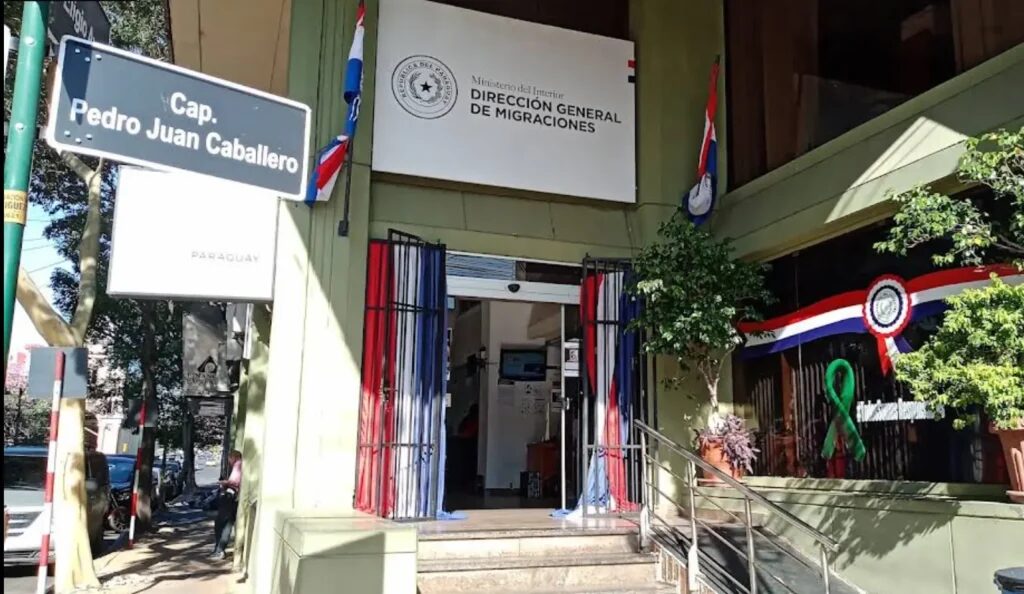
You need to file in person. If everything is prepared, our clients typically allow 2 to 3 working days in Paraguay for filing and related document runs. Migraciones accepts residence matters at its central office in Asuncion and regional offices including Ciudad del Este and Encarnación. Confirm the office and current intake arrangements before booking travel.
If You’d Rather Skip All of This
Paraguay also introduced a separate investment route in April 2026: the Investor Pass under MIC Resolution 0283/2026. It lets qualified investors apply directly for permanent residence through a Foreign Investor Certificate without first holding temporary residence. Instead of the conversion solvency categories, applicants must meet investment, source-of-funds, background, and monitoring requirements. The minimums are $200,000 in Paraguayan financial instruments, maintained for at least two years; $200,000 in real estate used for economic activity, not personal or family use; $150,000 in a tourism project with a business plan and technical follow-up; or $70,000 in a productive business with a business plan and at least five formal jobs. If you already hold temporary residence, converting it will usually make more sense. The Investor Pass is mainly relevant to new applicants with enough capital who want to skip the temporary stage.
The Bigger Picture
Permanent residence makes the immigration side much simpler. Avoid an unjustified absence of more than three years, renew the card every 10 years, and you can apply for naturalization after three years counted from the permanent-residence resolution if you also meet the in-country activity and good-conduct requirements. Tax treatment is separate. Paraguay generally taxes Paraguayan-source income, and using a foreign payer or US LLC does not automatically make services performed from Paraguay foreign-source. My guides on the territorial tax system and the US LLC structure cover those structures, but check with a Paraguayan tax professional before treating remote-service income as foreign-source. If you’re at the start of the residency process, my guides on the cedula process and the full cost of Paraguay residency cover the temporary stage. If you’re deciding where to live, start with the neighborhoods of Asuncion.
The conversion is not hard. It’s a deadline with paperwork attached. The people who get burned are the ones who treat the expiry date as a suggestion or show up with a solvency story that contradicts their original file.
We handle Paraguay conversions end to end through our legal team in Asuncion, including a review of your original declaration against the new Resolution 407 categories before anything gets filed. If your window is opening, reach out here and we’ll map it out.