Paraguay vs Uruguay for Expats: Which One Fits Your Life (2026)
Paraguay and Uruguay are the two countries in South America that come up most often in tax planning conversations. Both have territorial-style tax benefits that attract Americans. Both are in the Southern Cone. Both offer a path to permanent residency and eventually citizenship.
But they are very different places, and the comparison is not as simple as “which one has lower taxes.” Cost of living, residency process, physical presence requirements, lifestyle, and long-term flexibility all look different depending on which country you choose.
I have been based in Paraguay for over four years and work closely with a law firm in Uruguay that handles our clients’ applications. This is a direct comparison of what actually matters when you are choosing between the two.
Tax Systems: The Headline Difference
This is what brings most people to the conversation, so let me be specific.
Paraguay has a territorial tax system. If your income is sourced outside Paraguay, you pay 0% personal income tax on it. That is not a temporary benefit, not a tax holiday, not a special program. It is the permanent structure of the tax code. Foreign-source income is not taxed. Period.
If you earn income inside Paraguay (from Paraguayan clients, a local business, or local employment), you pay 8% to 10% on that income. But if you are a remote worker, freelancer, or investor whose income comes from outside the country, your personal income tax rate is zero. Forever.
We wrote a full breakdown of how Paraguay’s territorial tax system works and the specific rules around what counts as foreign-source income.
Uruguay gives new tax residents a tax holiday on foreign-source income. As of January 2026, this benefit has been restructured. New residents who spend 183 or more days per year in Uruguay can elect a 10-year exemption on foreign-source income (plus the year they become a resident, so effectively 11 years). After that period ends, foreign-source income becomes taxable at up to 12%.
There are also investment-based paths to the tax holiday. If you purchase real estate worth $2 million USD or more, or make qualifying venture capital investments, you can access the benefit with different presence requirements. But for most Americans, the 183-day physical presence route is the relevant one.
The critical difference: Paraguay’s tax benefit is permanent. Uruguay’s expires. After 10 years in Uruguay, you start paying 12% on foreign income. In Paraguay, you pay 0% in year one and 0% in year twenty. For people thinking long term, this matters.
Residency Process
Paraguay residency is fast, cheap, and straightforward. You apply at Migraciones in Asunción, provide your passport, an Interpol background check (done locally), a medical exam, and proof of financial solvency. No apostilled documents from your home country are required. The process takes about 60 to 100 days from start to cédula in hand. Total cost is approximately $3,000 to $5,000 all-in when handled by a lawyer, including government fees.
The full cost breakdown for Paraguay residency is covered in a separate article.
Uruguay residency is more expensive and takes longer, but it comes with one unique advantage: you apply directly for permanent residency. There is no temporary phase. Uruguay grants permanent residency from the start, and it does not expire as long as you enter the country at least once every three years.
The process requires more documentation than Paraguay, including apostilled and translated documents. Costs run $5,000 to $8,000 all-in with a lawyer. Processing time varies but currently runs 4 to 12 months for approval.
Important note for 2026: Over the past year, Uruguay’s migration office has been approving residency applicants who do not spend time in Uruguay while their application is processing. This means Uruguay is effectively functioning as a full Plan B residency right now. You can apply, return home or continue traveling, and receive your approval without needing to sit in Montevideo waiting. This is a significant shift and makes Uruguay a much more compelling option for people who want a second residency without relocating immediately.
Cost of Living
This is where Paraguay pulls far ahead.
Paraguay (Asunción): A single person can live comfortably on $1,000 to $1,500 per month. Rent for a furnished one-bedroom in Villa Morra, the best expat neighborhood, runs $500 to $800. A meal at a local restaurant costs $3 to $5. A nice dinner out is $10 to $15. Groceries run $150 to $250 per month. Private healthcare is $50 to $100 per month. An Uber across the city costs $3 to $5.
Uruguay (Montevideo): A single person needs $2,000 to $3,000 per month for a comparable lifestyle. Rent for a furnished one-bedroom in a good neighborhood like Pocitos or Punta Carretas runs $700 to $1,200. Restaurants are roughly double what they cost in Asunción. Groceries are 40% to 60% more expensive. Healthcare is good but pricier.
Over 10 years, the cost difference adds up to $120,000 to $180,000 for a single person. For a couple, double that. Paraguay is simply a dramatically cheaper place to live.
For Americans who are also considering Buenos Aires, our cost of living breakdown for Buenos Aires puts it somewhere between Paraguay and Uruguay in terms of daily expenses.
Lifestyle and Culture
This is where Uruguay has advantages that the spreadsheet does not capture.
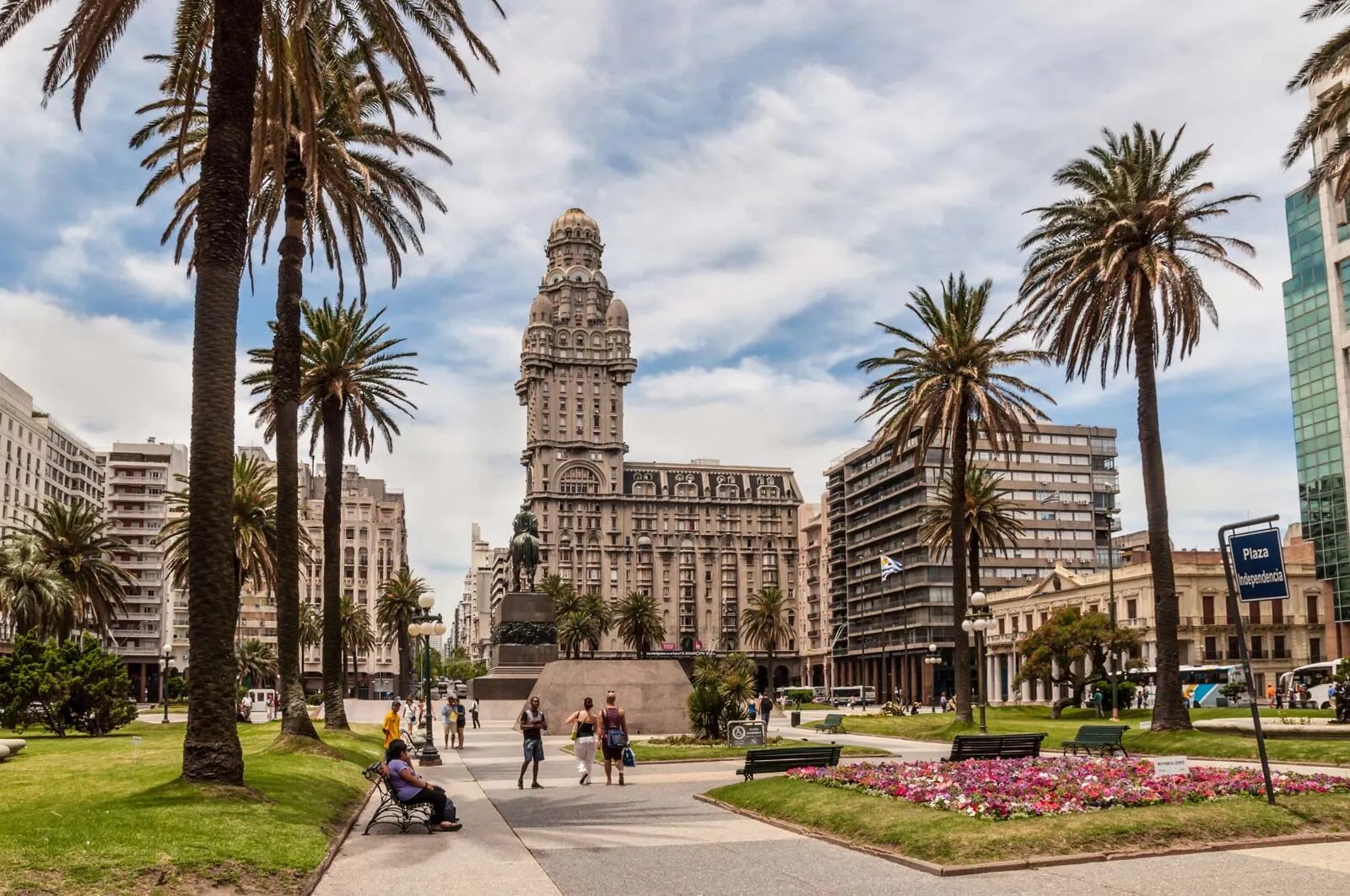
Montevideo is a more polished, more developed city than Asunción. The infrastructure is better. The roads are better. The public spaces are more maintained. Uruguay has a stronger middle class and a higher standard of public services (education, healthcare, security). The coastal lifestyle along the Rambla in Montevideo is genuinely beautiful, and Punta del Este is one of the most glamorous beach destinations in South America.
Uruguay also has a more cosmopolitan feel. It is smaller than Paraguay, but it punches above its weight culturally. There is more English spoken, more international restaurants, more of a European sensibility. If you want a city that feels like a small, relaxed version of Buenos Aires, Montevideo delivers.
Asunción is rougher around the edges. The infrastructure is developing but still has gaps. Public transportation is limited. The city is not walkable in the way Montevideo or Buenos Aires are. The culture is more conservative and more Guarani-influenced. Spanish is the primary language but Guarani is spoken everywhere, and the blend creates a cultural environment that feels distinctly Paraguayan.
What Asunción has is affordability, tax advantages, a growing expat community, and an increasing amount of modern development. New apartment buildings, better restaurants, and improved services are appearing steadily. It is a city that is getting better each year, but it is not there yet compared to Montevideo.
If lifestyle is your priority and budget is secondary, Uruguay wins. If cost and tax savings are your priority and you are willing to accept a less polished city, Paraguay wins.
Physical Presence Requirements
Paraguay requires you to enter the country at least once every three years to maintain your permanent residency. For temporary residency, you need to be more present during the initial period, but once you have permanent status and your cédula, the flexibility is significant. Many expats get their Paraguay residency, spend a period of time there, and then split their time between Paraguay and other countries in the region.
Uruguay permanent residency does not expire if you enter the country at least once every three years. Similar flexibility to Paraguay once you have permanent status. However, if you want the tax holiday, you need to spend 183 days per year in Uruguay. That is a real commitment. You cannot get the tax benefit while living primarily in another country.
For citizenship, the timelines are different. Paraguay requires three years of permanent residency before you can apply for naturalization. Uruguay requires three years if married, five years if single. Both allow dual citizenship.
Banking and Financial Infrastructure
Uruguay has better banking infrastructure. Uruguayan banks are more internationally connected, more comfortable with foreign clients, and more experienced handling international transfers. The banking system is stable and well-regulated. Opening a bank account as a foreign resident is straightforward.
Paraguay banking has improved but is still more limited. Most expats bank at Banco Atlas, Sudameris, or Itau. FATCA compliance means some banks are cautious about American clients, but it is workable. The banking system is functional for day-to-day life and basic international transfers, but it does not have the same depth or sophistication as Uruguay’s.
If you are moving significant capital or need robust private banking services, Uruguay has a clear edge.
Safety
Both countries are safe by South American standards.
Paraguay has a Level 1 US travel advisory (lowest risk). We wrote a detailed breakdown of safety in Paraguay for Americans. Asunción’s main concern is opportunistic theft, particularly motorcycle snatching. Violent crime against foreigners is rare.
Uruguay also has a strong safety reputation, though Montevideo has seen an uptick in property crime in recent years. Overall, both countries are among the safest in the region.
Who Should Pick Paraguay
You should pick Paraguay if cost of living and tax savings are your top priorities, you want your tax benefit to last forever rather than expire after 10 years, you want the fastest and cheapest residency process in the region, you are comfortable with a developing city that is improving but not yet polished, or you plan to split time between multiple countries in South America and want a low-cost, low-obligation base.
Paraguay is the practical choice. It is not glamorous, but the numbers work better than any other country in the region.
Who Should Pick Uruguay
You should pick Uruguay if you want a higher quality of daily life with better infrastructure, you value banking and financial services and plan to keep significant assets in the region, you are attracted to the coastal lifestyle and want access to Punta del Este, you prefer a more international and cosmopolitan environment, or you want permanent residency from day one without going through a temporary phase.
Uruguay is the lifestyle choice. You pay more for everything, but the quality of life reflects that.
The Smart Play: Both
A growing number of people are getting residency in both countries. Paraguay for the permanent 0% tax on foreign income and the low cost of living. Uruguay as a Plan B residency, a banking base, and a lifestyle option when you want to spend time on the coast.
The two countries are a short flight apart. Having residency in both gives you maximum flexibility. Live in Paraguay most of the year to keep costs down and taxes at zero, spend a month or two in Uruguay or Buenos Aires for the lifestyle, and maintain active residencies in both countries with minimal effort.
Trying to decide between Paraguay and Uruguay? We help Americans set up residency in both countries. Our team handles Paraguay directly, and we coordinate with a partner firm in Uruguay for the Uruguay side. Reach out to us here.
We get clients set up with residency in Paraguay and Uruguay, working directly with vetted local lawyers in both countries. Reach out to us here to talk through which setup fits your situation.