Buying an Apartment in Santa Cruz, Bolivia (2026 Guide)
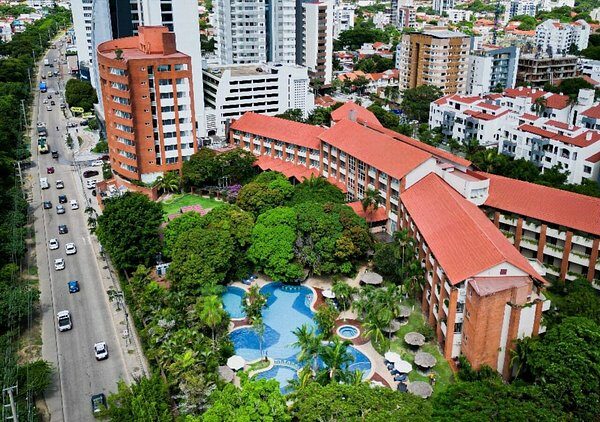
This guide is about one specific thing: buying a brand-new luxury apartment in the prime area of Santa Cruz de la Sierra, Bolivia. Not houses, which get their own guide for newsletter subscribers. Not the rest of the country, and not the rest of the city either. Just the new towers going up in and around Equipetrol, and how to actually buy into one without overpaying or getting burned.
I have been living in Santa Cruz since 2024. I watch these buildings go up from my window, I know the developers building them, and my team gets foreign buyers into their buildings. This is the guide I wish existed when I started paying attention to this market.
Why Santa Cruz, and Why Now
Santa Cruz is not what most people picture when they think of Bolivia. Forget the high-altitude postcards. This is a flat, green, tropical business city at 400 meters elevation, and it has spent two decades quietly becoming the economic engine of the country.
The numbers first. The City Mayors Foundation ranks Santa Cruz the 14th fastest-growing urban area in the world (roughly 4% per year, sustained over more than a decade). The 2024 census put the metro area at just over 2 million people, and Santa Cruz department passed La Paz to become the most populous in Bolivia. The department generates about 31% of national GDP, leads the country in GDP per capita, tax collection, and new company formation, and attracts the largest share of foreign investment. Over 260 towers of ten floors or more went up in recent years, and the city adds around a million square meters of approved construction every year.
So the city itself has been compounding for twenty years. What changed is everything around it.
The macro turn. For two decades Bolivia ran on one party (MAS), a fixed exchange rate, and heavy fuel subsidies. That model ran out of dollars. In October 2025, Rodrigo Paz won the presidency on a platform he calls “capitalism for all”: fiscal discipline, opening to foreign investment, and restored relations with the United States. He took office in November 2025 and moved fast. Fuel subsidies that cost the state roughly $2 billion a year were eliminated in December. The 2026 budget cut public spending hard. Since then:
- Three credit-rating upgrades in ten weeks. Fitch upgraded Bolivia in January 2026. Moody’s followed in March with a positive outlook. Then S&P delivered a rare two-notch upgrade in late March. Bolivia entered the election rated at the very bottom of the scale; the direction of travel since is straight up.
- The bond market agrees. Bolivia’s dollar bonds gained roughly 50%, the country’s risk spread collapsed from over 2,000 points to less than half that, and by February 2026 it had dropped below Argentina’s. In May 2026, Bolivia returned to global markets with a $1 billion bond that was five times oversubscribed.
- The currency got real. On June 29, 2026, Bolivia ended its 15-year fixed exchange rate and let the boliviano float. The official rate converged toward the street rate (around 10 to the dollar) for the first time in years. Behind it: an IMF program in negotiation and billions in committed multilateral financing.
I am not going to oversell this. Bolivia is still an emerging market, the ratings are still deep in recovery territory, and reforms are moving faster by decree than through Congress. But you do not get many moments where the macro inflects this clearly while prices are still sitting at an emerging-market floor. That is the window.
And here is the part that matters most for a foreign buyer: there is no mortgage market here. For a foreign buyer, financing simply does not exist; even for locals, credit is thin. The entire market runs on cash, in a country where dollars have been scarce for three years and local salaries are among the lowest on the continent. If you are arriving with US dollars, you are the strongest buyer in the room. Your purchasing power here is enormous.
That is the thesis. Fast-growing city, prime district, hard-dollar asset, cash market, macro turning. Everything below is execution.
How to Read a Price Here (Oficial vs. Paralelo)
Before you look at a single listing, learn this. The same apartment in Santa Cruz can wear three different price tags, and half the market still writes prices in a code you need to decode.
For the past three years Bolivia ran two exchange rates at once. The official rate was pegged at right around 7 bolivianos per dollar, but actual dollars were scarce, so the parallel rate (the street price of a real dollar in Bolivia) sat at about 10. The float that just began is merging the two, with the official rate now sliding toward the street rate. But the market spent years pricing around that gap, and the listings still speak the language. Here is the decoder:
A price in bolivianos. Simple. Divide by the street rate (call it 10) to get your cost in real dollars. Bs 700,000 is $70,000.
A price in dollars, cash. You will see “dólares billete,” “precio cash,” sometimes “TC paralelo.” Also simple: the sticker is the real price. This is how every number in this guide is quoted.
A price in dollars “al tipo de cambio oficial.” This is the one that confuses everyone. It means the dollar figure is really a boliviano price, converted at the official rate of about 7. Sellers inflated their dollar stickers so that buyers paying in bolivianos covered the gap between the two rates. If you are paying with real dollars, your cost is roughly 30% below that sticker. That is not a discount. It is just what the sticker actually means.
A live example, from one pre-sale tower in Equipetrol: studios listed at $95,000 to $110,000 al tipo de cambio oficial, and $69,500 in cash dollars. Same units. Run the first number through the decoder: $95,000 at the official 7 is about Bs 660,000, and Bs 660,000 in real dollars at the street 10 is about $66,000. Right where the cash price lands.
So when you see a $76,000 studio or a $113,000 apartment “al tipo de cambio oficial” sitting next to this guide’s numbers, do not panic and do not celebrate. Convert first. And when in doubt, ask the seller one question: what is the precio cash, in dólares billete. We run this conversion for clients on every building automatically.
Rule One: Stick to Equipetrol
If you take one thing from this guide, take this. Buy in Equipetrol.
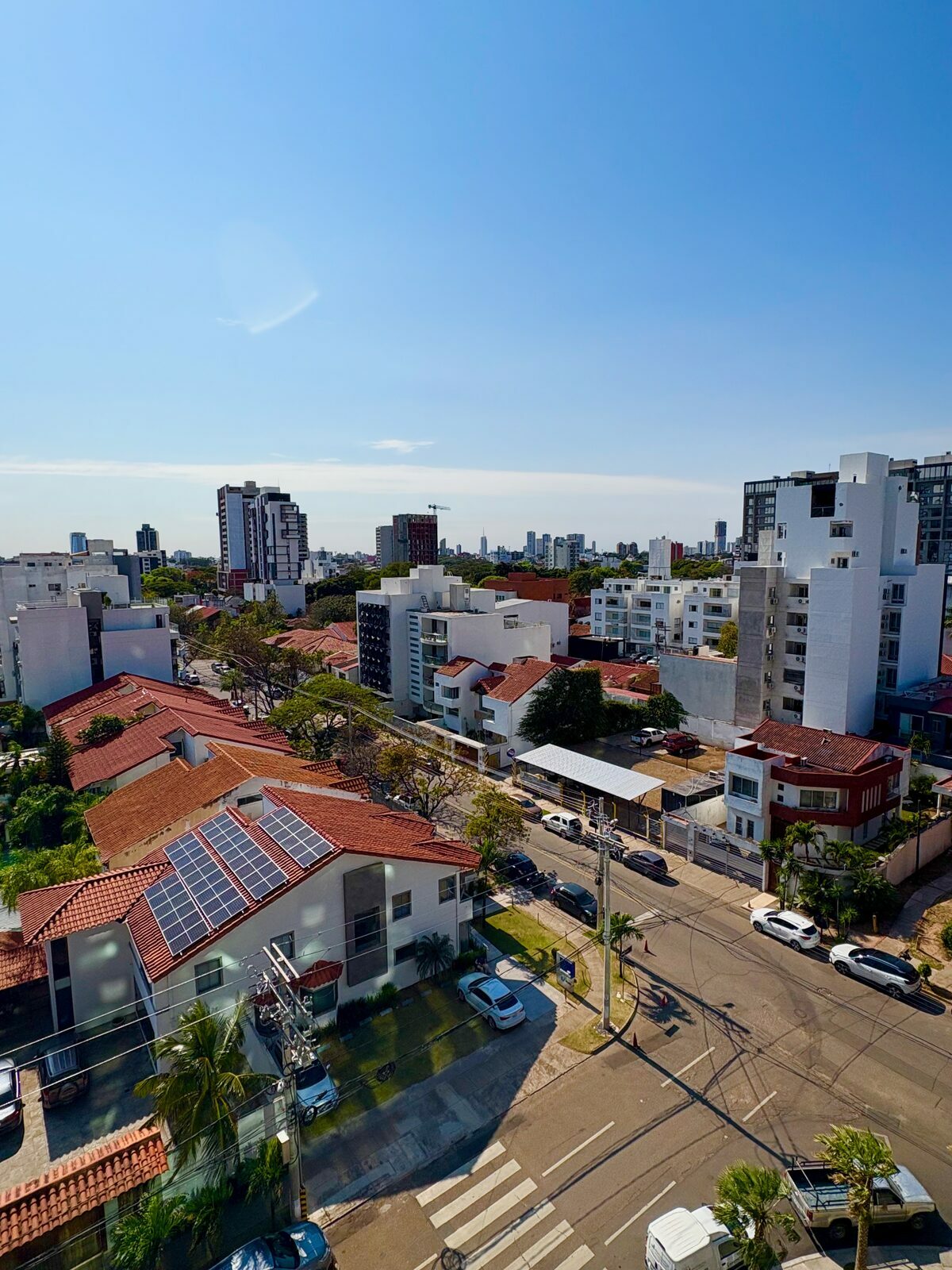
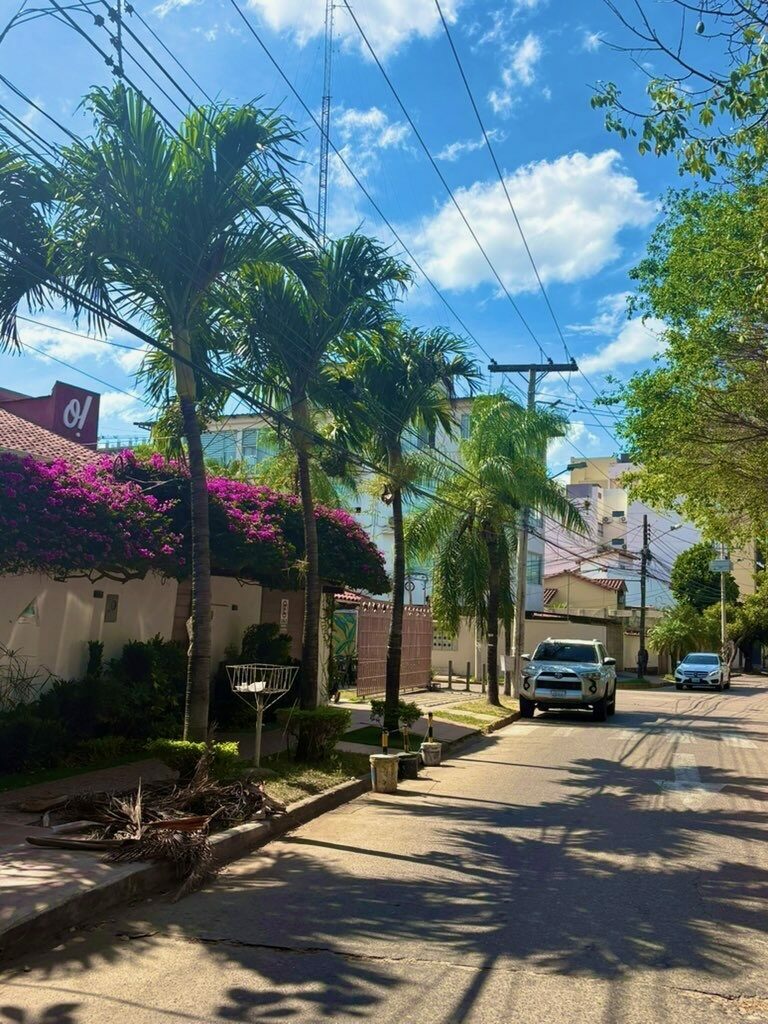
Equipetrol is the safest, most modern, most walkable part of Santa Cruz. It is where the good restaurants, cafes, gyms, coworking spaces, international groceries, and the best new towers are concentrated. Avenida San Martín is the spine running through it: the Norte side leans business (offices, malls, financial activity), the side toward the old center leans residential (cafes, tree-lined streets, luxury buildings). The adjacent pockets (Sirari, San Carlos, the edges of Las Palmas) are effectively the same market at a small discount.
It is also the most liquid sub-market in the city. Easiest to rent, easiest to resell, first to recover in any downturn. When I write about the cost of living in Santa Cruz, every number in that article is an Equipetrol number, because that is where a foreigner should land.
There is a deeper reason Equipetrol holds its value, and you should understand it before you look at a single listing: this is the most important real estate market in the entire country, because property is what Bolivians do with money. There is no stock-market culture here. Bolivians who build wealth put it into hard assets that hold value, in dollars where possible, in the strongest location they can reach, and that means real estate in Equipetrol and the areas around it. Home ownership matters here the way it matters in the US, and locals do not really see an alternative to owning. It is why single-family homes in and around Equipetrol are genuinely expensive, even compared to homes in far richer countries. And it is why apartment prices at this level have an entire economy of local money standing underneath them. A one-bedroom in the $60,000s is not priced there because nobody wants it. It is priced there because the country is short on dollars, while a whole population keeps parking everything it saves into physical property. That is what makes the entry point so hard to beat.
Could you find something cheaper a few rings out? Sure. But the entire thesis is owning the prime corner of a fast-growing city and holding it. The other neighborhoods are a different conversation, and not one this guide is having.
One note before moving on, because it comes up constantly: Urubó, the wealthy suburb across the river, is where a lot of buyers also look. Urubó is house-and-land territory, and covering it properly would make this guide twice as long. If you want to talk Urubó with me or my contacts there, book a call with us here.
Buy New Construction, and Buy in Pre-Sale
New towers in Equipetrol sell in two stages, and the stage you buy at is the single biggest lever on your price.
Pre-sale (preventa) is when you buy before or during construction, directly from the developer, off the plans. In my experience, pre-sale pricing runs roughly 20 to 30% below what the same apartment costs once the building is finished and standing. You are effectively helping the developer fund the build, and you are paid for that with a lower price and first pick of the floor plan.
The catch is speed. The good stuff goes fast. Studios and one-bedrooms typically sell out during construction, well before delivery. By the time a building is one to two months from completion, what remains is usually a handful of the largest, highest-priced units. If you want selection and the best number, you want to be early.
Early only works with a proven developer. Pre-sale is a bet that the building gets delivered on time, to spec, by a company that will still exist at the end. That bet is very good with the right names and very bad with the wrong ones. Bolivia tightened this up in 2022: after a wave of pre-sale fraud complaints, the government issued Supreme Decree 4732, which requires developers to use consumer-ministry-certified contracts that must state the delivery date, itemize every payment, lock the specs, prohibit unilateral price changes, and (usefully for you) guarantee your right to resell or assign your unit before delivery. It also made selling without municipal construction permits an abusive practice per se. Good rules. But rules on paper are not a substitute for a developer with twenty years of delivered buildings, which is why the next section is the most important one in this guide.
That is the whole game: get in early, on a building that is going to get delivered, from a developer who always delivers.
The Developers to Buy From
You do not need to survey the whole market. In the prime luxury segment, a small number of established developers do the volume, and all of them build in and around Equipetrol. These are the three I take clients to, and the buildings to know them by.
SKY Properties: the heavyweight. Building in Santa Cruz since 2001. By their own count: 37 completed projects, 2,518 units delivered, 24 years in the market, with two to three towers under construction at any given time, year in and year out. That cadence is exactly what de-risks a pre-sale purchase: this is a machine that starts buildings and finishes them, cycle after cycle. Their delivered portfolio reads like a map of prime Santa Cruz: Sky Lux, Sky Lumiere, Sky Aqualina Residence, Sky Epic, Sky Palmetto, and the Sky Collection line (Phoenix, Park View, Art Deco, Plaza Italia, Equipetrol). Their current under-construction flagship, SKY LEVEL, is the worked example below. One quirk to know: SKY does not run an in-house sales floor. Their inventory sells exclusively through brokerage partners (RE/MAX and Century 21), which is why their brochures carry agency logos; what that means for you as a buyer is covered further down.
Eurodesign: the boutique. Smaller, design-led, and consistently in Equipetrol. Le Blanc (nine floors of quiet luxury with an infinity pool, sauna and jacuzzi) and Soho (a 50-unit building of 1- to 3-bedrooms) both delivered in early 2025, and Eurodesign Residence launched in pre-sale at aggressive per-meter pricing. If you want smaller buildings with fewer neighbors, this is the lane.
eLiTe: the Sirari specialist. The lower-profile developer behind the “by Elite” buildings, concentrated in the leafy Sirari pocket on Equipetrol’s edge: Legendary by Elite (delivered; infinity pool, gym, cowork), Onix Art by Elite, Element by Elite, and Infinity by Elite. They live on Instagram rather than on a corporate website, which is normal here, but the product is real and the location is excellent. This is the segment where my team’s on-the-ground checks earn their keep.
Why the big names matter beyond the buildings: how you pay. The serious developers hold USD accounts in the United States. You wire dollars from your US bank to their US account, under a Bolivian purchase contract. You do not carry cash into Bolivia. You do not wrestle with the local banking system to close. During the 2023 to 2025 dollar crunch this was the single biggest practical advantage in the entire market, and it still is: reliability, US-based payments, and a delivery track record measured in decades. In an emerging market, that is the combination you want.
A Real Example: SKY LEVEL
The best current example of everything above is SKY LEVEL, the new SKY Properties tower going up in Equipetrol. I am using it because it checks every box in this guide (best developer, best neighborhood, best amenity floor I have seen in this city, priced right), not because it is the only option.
The location. Calle Enrique Finot, on a full corner block between Calle 5 and Calle 6 Oeste, about 150 meters off Avenida San Martín. That is dead-center prime Equipetrol: you walk to everything that matters in the neighborhood.
The building. Eighteen floors. Ground level is landscaped retail (ten commercial spaces with water features, which keeps the street alive), then three levels of parking and storage, then fourteen residential floors of 24 units each, then an entire 18th floor of amenities. Four high-speed elevators, smart-panel access control at the lobby, CCTV throughout, fire sensors in every unit, motion-sensor lighting in circulation areas.
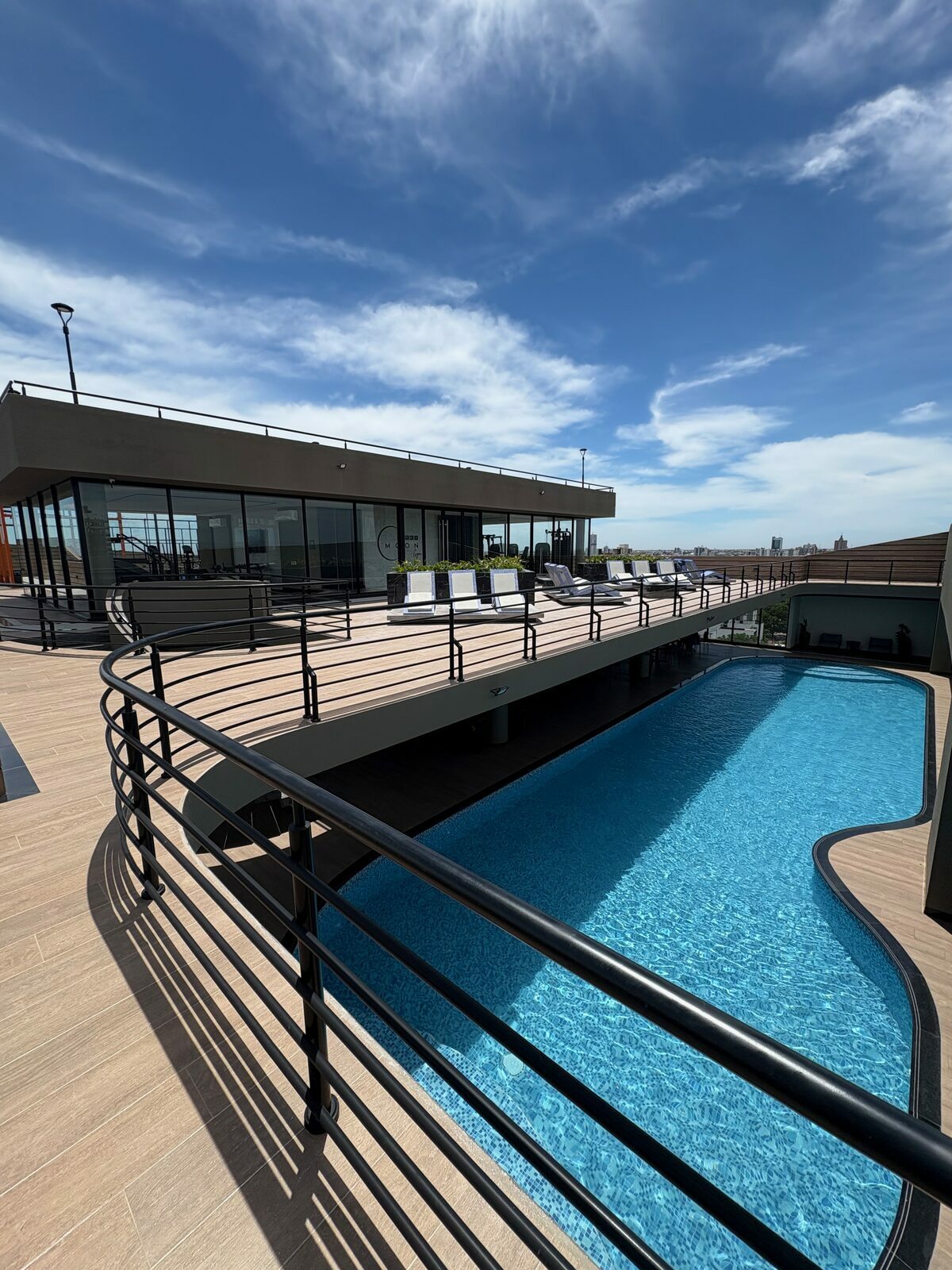
The amenity floor. The whole top floor, with the views: a 40-meter covered lap pool, fully equipped gym, wellness center (jacuzzi, dry sauna, steam sauna), private cinema, game room with billiards and foosball, coworking space and meeting rooms, two event salons, fully equipped rooftop BBQ stations, and a lounge. Building amenities in Santa Cruz are an arms race, and this is the current state of the art.
The apartments. Five floor plans, and deliberately no studios. The smallest unit is 50m². Two-bedroom corner and interior layouts run 88.5 to 94m², and the 1-bedroom suites run 50 to 60m². Everything is delivered essentially turnkey: imported large-format porcelain floors (60x120 Carrara-style), European aluminum windows with hermetic double glazing, granite or sintered-stone kitchen counters, full built-in kitchen cabinetry and appliances (extractor, oven, cooktop, built-in microwave in the 1- and 2-bedrooms), GREE inverter A/C, water heater, LED lighting throughout, glass shower boxes, backlit mirrors, and high-security digital door locks. You buy it, you furnish it, you live in it or rent it. No renovation phase.
The pricing (pre-construction, as of mid-2026). The 1-bedroom suites (Models 3 through 5, 50 to 60m²) start at $68,000, which pencils out to roughly $1,130 to $1,360 per square meter. The corner 2-bedroom (Model 2, 88.5m²) is $132,000, about $1,490 per square meter. Both prices include parking, which is not a given in this market: elsewhere, parking and storage (baulera) are often sold as separate line items, so when you compare buildings, always ask for the full all-in number. My team does this by default.
For context: hard-dollar pricing for new luxury product in and around Equipetrol currently clusters at roughly $1,100 to $1,450 per square meter, with premium corners pushing higher. SKY LEVEL sits inside that band, from the developer with the longest delivery record in the city, on one of the best blocks in the neighborhood. The building is priced at a slight premium on entry point because there is no cheap studio to get you in the door, and that is by design: fewer micro-units means fewer churning short-term rentals and a building oriented toward people actually living in it. As I explain below, that is exactly what you want to own here.
The payment structure. SKY’s sales management confirmed the terms to us directly: 40% down, 60% on delivery. Two payments, nothing in between, which keeps the math and the planning simple. From what we understand, that split likely applies across SKY pre-sales generally. Ask us and we will confirm the current terms on whichever building you are looking at.
How Buying Actually Works, Step by Step
Nobody publishes this part in English, so here it is. This is the standard new-construction pre-sale path in Santa Cruz, start to finish, and it works the same whether the developer sells direct or through a broker channel.
1. Shortlist and pick your unit. Decide budget, size, and whether this is for living, renting, or both. Floor plans sell from a price list (lista de precios) that updates as the building sells through and as construction advances; earlier means cheaper and more choice. Corner units and higher floors carry premiums and sell first among the large layouts.
2. Reserve. You hold a specific unit with a small reservation deposit (typically a few hundred to a thousand dollars). Get the refund terms of the reserva in writing before you pay anything.
3. Sign the purchase contract. With a serious developer this is a formal pre-sale contract (compromiso/contrato de compraventa de bien futuro), and under Supreme Decree 4732 the contract model must be certified by the consumer-protection authority. Before signing, the checklist my team runs looks like this: the developer actually owns the project land (folio real check at the property registry), construction permits and approved plans exist, the delivery date is stated in the contract with penalty terms, every payment is itemized with no room for surprise charges, the specs and surface area are locked, your right to resell or assign the unit before delivery is in the contract, and it is clear who pays the transfer-stage taxes and fees. If the land carries a construction loan, we confirm how the bank’s lien gets released unit by unit so it never touches your title. This is lawyer work, it costs very little in Bolivia, and you should never skip it.
4. Pay the way the deal is structured. This is a cash market, but cash does not always mean a single wire. Payment structure varies by developer and by building: some pre-sales here run as a down payment (often 10 to 20%), installments during construction, and the balance at delivery, while other developers simply quote their best price for cash up front and a higher price for staged terms. SKY LEVEL, as covered above, runs a clean 40% down and 60% at delivery. Confirm the exact structure for the specific building before you reserve, because it is deal by deal, not a market rule. Two things to know either way: there is no escrow system in Bolivia (anything you pay before delivery is an advance to the developer, which is precisely why developer track record is the whole ballgame), and contracts should state the currency and payment mechanics explicitly, especially now that the exchange rate floats.
5. Construction. Expect roughly two to three years from launch to delivery depending on when you entered. The big developers run multiple towers on overlapping cycles and have every incentive to finish: their next pre-sale depends on this one delivering.
6. Delivery and inspection. When the building is finished, you receive your unit at a formal handover (acta de entrega). Inspect everything, exhaustively, and get every defect written into the acta before you sign it. Under the Civil Code, the builder remains liable for hidden defects for six months after reception and for structural integrity for three years. Apparent defects you accept silently at handover are yours, so this hour of pickiness is worth real money. We attend deliveries with clients.
7. Title and registration. New buildings are first registered under the condominium regime (propiedad horizontal), which opens an individual title page (folio real) for each unit. Your purchase is then formalized as a public deed before a notary and registered in your name at Derechos Reales, the property registry. Bolivia runs a clean folio real system: whoever is registered owns it, full stop, and until you are registered it is not legally yours. So this step is not paperwork to postpone; it is the finish line, and with the price fully paid the developer is legally obliged to deliver title without delay. Registration itself is fast (days to a few weeks) and cheap (about half a percent).
That is the entire machine. None of it is exotic. It is simply faster and safer with people who have done it many times, in Spanish, with the specific developer on the other side of the table.
How the Money Works
The mechanics are simpler than people fear. You just need to know the map.
It is a cash market. No mortgages, no banks in the middle, no financing contingencies. Whether you pay in one wire or staged against the construction schedule, it is your own cash doing the work, and cash buyers set the price.
There is one financing exception, and we will be sharing it soon. Everything in this guide describes the prime market, where cash rules. But there is one major project, in another zone of Santa Cruz entirely, where real monthly financing exists: a 44m² studio at $39,000, with monthly financing, in a building still in its early phases. We are putting that piece together now. Subscribe to the newsletter to get it when it drops, or book a call if you want to get moving on it before everyone else reads about it.
You pay in USD, from the US. This is the big one. The established developers hold US-based dollar accounts, so your payments move as ordinary domestic-style wires from your American bank to theirs, documented against your Bolivian purchase contract. SKY, for one, confirmed to us directly that they take payment three ways: wire to their US dollar account, bolivianos, or physical dollars in hand. Take the wire. You never board a plane with cash, and you never push six figures through the local banking system. During the years when physical dollars in Bolivia were scarce enough to trade at a 40% premium, buyers who could pay clean USD abroad were the most attractive counterparties in the market. They still are, and it shows up in your negotiating position.
Closing costs are low, especially on new construction. By law, the 3% transfer tax on a developer’s first sale is the seller’s obligation, so confirm in the contract that it is not being quietly passed through to you. Your own line items are small: registration at Derechos Reales runs about half a percent, the notary charges a small fixed tariff (hundreds of bolivianos, not a percentage), and a lawyer plus registry certificates cost a few hundred dollars all-in. In practice, a new-construction buyer’s own out-of-pocket closing load often lands around 1 to 2% of the price, and even a conservative budget with everything passed through stays under 5%. Compare that with the 8 to 12% all-in transaction costs common across much of Latin America.
Ongoing costs are almost funny. Building fees (expensas) for an apartment in a full-amenity tower run about $25 to $50 a month, and that covers the 24/7 security, the pool, the gym, the saunas, the staffed front desk, all of it. The annual property tax (IPBI) is assessed on a cadastral value far below market, so most owners in this price range pay somewhere between a nice dinner and a few hundred dollars per year. Holding an apartment here costs almost nothing, which is exactly what you want in a buy-and-hold market.
The residency question, honestly. Whether a foreigner can register title on a passport alone is one of the few genuinely murky points in Bolivian practice: the law does not require residency to buy, and plenty of lawyers will tell you a passport (or a power of attorney to a local attorney) gets it done, but the property registry’s own checklist asks for a Bolivian ID, and individual registrars have discretion. The clean path, and the one we run for clients, is to get temporary residency in parallel with the purchase. Bolivia has the cheapest, fastest residency in South America (about $2,000 all-in, approved in about a week, no apostilles), and the cedula unlocks everything else anyway: local bank accounts, including USDT accounts at Banco Bisa, utilities in your name, and a cleaner tax setup if you ever rent the unit out. Buy the apartment, get the residency, run them on the same timeline. My team handles both.
And if you live here, the tax picture is hard to beat. Bolivia taxes on a territorial basis: foreign-source income (your remote salary, your dividends, your capital gains abroad) is simply not taxed. A dollar-earning owner living in Equipetrol part of the year keeps what they earn, in a city where $1,000 to $1,200 a month is a very good life.
Work With Us and Skip the Agent Fee
Here is the part most foreign buyers get wrong, and the reason this guide exists.
The default path is walking into a big-brand agency and having an agent drive the process. Three problems with that. First, the industry-standard agent commission here is 5%, and when a foreign buyer is on the other end, that is who it gets priced against. Second, the agency model is incentivized to show you inventory: you will tour a long list of apartments, most of which will not live up to the standard of the prime developers, because the agent closes either way. Third, very few agents here are genuinely bilingual. If you do not speak Spanish, you are negotiating the largest purchase of your life through a language barrier, with someone whose incentive is volume.
My team is the other path. We are bilingual, we already know which buildings are worth your time, and we take you straight to the developer wherever the developer sells direct (Eurodesign, eLiTe, and most of the market). No agent in the middle, no commission charged to you, and the developer’s real pre-sale price list on the table. We handle the lawyer, the contract checklist, the wire logistics, the delivery inspection, and the residency if you want it. In your language, with someone on the ground who watches these buildings go up in real time.
The one exception is SKY. SKY does not sell direct to anyone: their inventory moves exclusively through their brokerage partners, RE/MAX and Century 21. You cannot go around that channel, and neither can we. What we do instead is run your SKY purchase through it: we know the buildings and the price lists, we steer you to the right units, we sit on your side of the table in English, and working with us does not increase your fee. Same checklist, same protection, whichever door the building sells through.
Either way, you end up in the same place: the right building at the real price, with nobody billing you an extra 5% for a tour of mediocre inventory.
What the Apartment Earns: The Honest Version
Here is what happens after you own it, and this is where I want you clear-eyed rather than sold.
Do not buy this to flip it. Prices here have not bubbled; in hard dollars, prime Santa Cruz has been roughly flat for years while the city doubled in size. That flat line is the opportunity: you are buying the best neighborhood of a 2-million-person, fastest-growing-city-in-the-hemisphere economy at $1,100 to $1,500 per square meter, numbers that do not exist anywhere comparable on the continent. The bet is that the new macro regime (floating currency, ratings upgrades, foreign capital returning) closes some of that gap over the years you hold.
And think about what the downside even looks like here. The chance of the floor dropping out from under these prices is low. Real, but low, and this is a market that just got upgraded, not downgraded. If Bolivia hit serious financial or political trouble anyway, a bad outcome on an apartment like this looks like a 5 or 10% dip. Call it five or ten thousand dollars of paper value on a unit you paid cash for, not the six-figure hole people took on mortgage-leveraged homes in a US crash. And the apartment is still yours. Nobody is taking it from you. That asymmetry is the whole position: small, capped, unleveraged downside against a repricing story that is already in motion.
Long-term rental: the base case. New 1-bedrooms in Equipetrol rent furnished at roughly $400 to $550/month; 2-bedrooms at $700 to $900/month, typically with building fees included in the rent. Against current pre-sale pricing, that pencils out to a gross yield in the 6 to 7% range, and I want to be straight with you about that number: it is modest. This is not Medellín, it is not Asuncion, and if you run the buy-versus-rent math here you will notice rents are cheap too. The yield covers your costs and pays you something while you hold. It is not the reason to buy. The reason to buy is the entry point. Renting formally means a simple tax registration and an effective 13 to 16% of gross rent in local taxes; a property manager (or my team) handles the mechanics if you are abroad.
Short-term rental: works, but only at the premium end. I will give you the real numbers, because most people selling apartments here will not. Santa Cruz has around 1,700 active Airbnb listings, supply grew over 20% last year, and nearly two-thirds of it is studios and 1-bedrooms. Citywide occupancy sits around 30%, the average nightly rate is about $35, and the median listing grosses only a few hundred dollars a month, less than a long-term lease on the same unit. In other words: the cheap-studio Airbnb game is crowded and mediocre. The operators who win here run larger, premium, well-furnished units in the best buildings, where supply is thin, rates are multiples higher, and the top tier grosses $750+ per month and up. That is precisely why a building like SKY LEVEL, with no studios and a residential character, is the right vehicle: scarce product rents better, short or long term. An Airbnb plan can absolutely work in Santa Cruz. It works at the premium end, run professionally, and my team can plug you into management for exactly that.
Or just live in it. Plenty of my clients buy for part-year living: tropical weather, a $15 ribeye, $2 Ubers, building amenities that would cost $300/month in the US, and a total monthly budget nicer-than-comfortable at $1,200. The apartment holds the money; the city pays the dividend in lifestyle.
The Risks, Plainly
I am not going to pretend this is risk-free, and you should not trust anyone who does.
It is an emerging market, recently stabilized, not yet proven. The currency floated days before this guide was written. Inflation ran 20% in 2025 and the devaluation will push prices around in the short term. The new government’s reforms are moving largely by decree while Congress stalls the big structural laws. The ratings upgrades came off the bottom of the scale. If the reform program breaks down, the repricing thesis slows with it. My view is that the direction is set and the entry price compensates you for the ride, but you should size the position like the emerging-market bet it is.
Pre-sale is developer risk, concentrated. There is no escrow here; your construction-phase payments are advances to the builder. The 2022 consumer-protection decree gave buyers real contractual teeth, but the actual protection is choosing developers with twenty-plus years of delivered towers and multiple projects always in motion. That is why this guide names three names and not thirty.
Illiquidity is real. You sell an apartment here in months, not weekends, and the resale market prices in dollars against a cash-buyer pool. Do not park money here that you need back on a schedule.
Title discipline matters. Ownership in Bolivia is what is registered at Derechos Reales, nothing else. Clean folio real, registered deed, taxes current. Follow the process in this guide and you are protected by the same registry system locals rely on; skip steps and you are relying on luck.
The climate is tropical, not hazardous. No earthquakes to speak of down here in the lowlands (the seismic action is in the Andes, hundreds of kilometers west), no hurricanes, and the river-flood defenses built after 1983 have kept the city core dry for four decades. The honest climate risk is that it is hot from October to March. That is what the 40-meter pool is for.
Who This Is For
This is the right move if you: earn or hold dollars and want a very low entry point into an emerging market that was just upgraded politically and financially; understand the rental yield is modest and the case is the entry price, the local demand under it, and the long-term repricing; want a part-year tropical base with a near-zero carrying cost; or are building a Bolivia flag anyway (residency, territorial tax, banking) and want the real asset to anchor it.
It is not the right fit if you: need financing (prime Santa Cruz is cash, with the single exception covered in the money section), need liquidity on a timeline (this is a hold), want a beach (Santa Cruz is many things; coastal is not one of them), or expect Dubai-style flip gains by next year (wrong market, wrong thesis).
Common Mistakes
Buying resale when pre-sale exists. Paying the finished-building price for a unit the developer would have sold you 25% cheaper eighteen months earlier is the most expensive mistake in this market.
Buying a studio “for Airbnb.” Two-thirds of the short-term market is already studios and 1-bedrooms fighting over 30% occupancy at $35 a night. Scarcity wins; buy the bigger unit.
Judging developers by renderings. Everyone’s renderings are gorgeous. Delivered buildings, delivery dates hit, and towers currently under construction are the only résumé that counts.
Signing without the land and permit checks. Folio real, construction permits, certified contract, lien-release mechanics. An afternoon of lawyer work protects a six-figure position.
Wiring anything before the paperwork. Reservation terms in writing, contract reviewed, then money moves. In that order, every time.
FAQ
Can foreigners actually own apartments in Bolivia? Yes, outright, same rights as locals, in your own name, in the city. (The constitutional restriction on foreigners is about land within 50 km of the borders; Santa Cruz is nowhere near one.)
Do I need residency to buy? Not to buy, and the practical registration question has a clean answer: run cheap, fast Bolivian residency in parallel with the purchase, or buy via power of attorney through a local lawyer. We set up either.
Do I need to be in Bolivia to do this? Ideally you come once: see the buildings, pick the unit, sign, and (if you want it) file residency the same week. The rest runs remotely. A pure-remote purchase via power of attorney is possible too.
Can I really pay without bringing money into Bolivia? With the major developers, yes: US-to-US wire into the developer’s American account, documented against your purchase contract. That is the standard we set up for clients, and it is the single biggest stress-remover in the whole process.
Can I sell my unit before the building is even finished? Yes. Certified pre-sale contracts must allow you to resell or assign your unit before delivery, and in a building that sells out early, late buyers exist. That is your escape hatch, though the plan should be to hold.
What does it cost to hold per year? Building fees roughly $25 to $50 a month, property tax typically well under a few hundred dollars a year, and that is it. No mortgage, remember.
Is the rent really taxed? Formal renting costs an effective 13 to 16% of gross rent in local taxes, filed locally. Foreign income, meanwhile, is taxed at zero. After taxes the yield stays modest, which is fine, because the yield was never the point.
Are prices going to spike now that the macro turned? Nobody honest will promise that. What I can show you is the setup: decade-flat hard-dollar prices, a modest yield while you hold, a repricing macro story, and a city compounding at 4% a year. The entry point is the trade, and you collect a little rent while it plays out.
Why not just use a Century 21 agent? Walking in cold means the standard 5% commission, a lot of mediocre inventory, and Spanish-only negotiation. One nuance: SKY buildings only sell through their exclusive broker partners (RE/MAX and Century 21), so for SKY that channel is unavoidable. The difference is going in with us: the exact building and unit already picked, your side of the table covered in English, and no added cost to you. Every other developer on the short list, we take you direct.
Getting Started
The first step is the same one I give everyone: book a flight to Santa Cruz de la Sierra (Viru Viru International Airport, VVI) and come see Equipetrol with your own eyes. Walk San Martín at 8pm on a Thursday and the thesis explains itself.
Before you fly, or if you want to move faster than that, send me three things: your budget, the size you want, and what the apartment is for (living, renting, or both). We will come back with the current pre-sale price lists from the top developers, what is still available in each building, and an honest read on which units we would take at those prices.
We get foreign buyers into Santa Cruz’s best new buildings: developer-direct wherever possible, through the exclusive broker channels where required, always bilingual, and never with a commission added to your price. Residency handled in parallel if you want it. Reach out to us here to get started.
And if it is a house you are after rather than an apartment, that is a different guide entirely, but it is absolutely something we consult on. If you are looking at houses in Santa Cruz, in neighborhoods like Urubó, book a call with us here.
Either way, subscribe to the newsletter alongside 1,000+ future Latin America homeowners. Santa Cruz apartments and houses both land there, and the Santa Cruz drop is coming.
Jack’s World: relocation and real estate across the Southern Cone since 2021. This guide is informational, not investment, legal, or tax advice. Figures are current as of July 2026 and move with the market; pre-sale prices and availability change monthly. Verify everything specific to your purchase with your own counsel, or let my team do it with you.