Bolivia vs Paraguay for Crypto and Privacy in 2026
Paraguay used to be the obvious answer for crypto holders looking for a South American base. Territorial tax, fast residency, no CRS, and a government that mostly left you alone. For years, that was the pitch. It worked.
In March 2026, Paraguay’s tax authority (DNIT) issued Resolution 47/2026. DNIT’s rule covers resident individuals and entities with more than $5,000 in annual crypto transactions, plus operators of platforms in Paraguay. Wallet addresses, transaction hashes, blockchain networks, counterparty information, amounts, and USD values. All of it. Filed annually. This is a domestic transaction-reporting rule. CARF is a separate framework for reporting through service providers and exchanging information internationally.
Bolivia lifted its crypto ban in June 2024 and has since integrated stablecoins into its banking system. Banks offer USDT wallets. Bolivia has not implemented CRS or CARF. Its banks have their own reporting duties, and its territorial tax system taxes Bolivian-source income.
If you are a crypto holder choosing between these two countries right now, the calculus has changed significantly in the past year. Here is where each one stands.
Crypto Reporting: The Core Difference
Paraguay (Resolution 47/2026). As of fiscal year 2026, resident individuals and entities whose cumulative crypto transactions (buys, sells, swaps, staking, transfers, payments) exceed $5,000 USD in a year must file detailed reports with DNIT. The required data includes the wallet addresses involved in each transaction, the transaction hash on the blockchain, the blockchain network used, counterparty information (who you traded with), the amount of crypto and its USD value at the time, and the date and type of each transaction.
Filing is annual, in the third month after the fiscal year ends; the first return covers 2026 and is due in March 2027 under DNIT’s schedule. Platform operators report under a separate obligation, without that $5,000 threshold. This is not optional and it is not a suggestion. Failure to file carries penalties.
To be clear: Paraguay still has a territorial tax system. Foreign-source income is still not taxed. Resolution 47 is about reporting, not taxing. A foreign platform alone does not make a gain foreign-source. The practical privacy concern is that your wallet activity, your counterparties, and your transaction history are now on file with the Paraguayan government.
Paraguay’s first CRS exchanges are scheduled for 2027. That system covers financial-account information; Resolution 47’s domestic crypto return is a separate obligation. The crypto data also exists on file and can be shared through other lawful information channels.
We wrote a full breakdown of Paraguay’s crypto reporting and CRS status when Resolution 47 was issued.
Bolivia. Reporting runs through banks and regulated providers rather than Paraguay’s individual wallet-return system. UIF rules require banks to identify customers, check virtual-asset providers’ registration, and report suspicious activity. Ordinary tax returns still apply to taxable income.
Bolivia has not implemented CRS or committed to CARF as of September 2026. CARF’s first international exchanges start from 2027, with 2026 data collection for early adopters. Other lawful information-sharing channels remain available.
The OECD withdrew its June 2025 Bolivia membership announcement in October 2025. Bolivia remains outside the CRS exchange timetable.
For right now, the difference is in who files the crypto data: Paraguay’s rule reaches individual holders, while Bolivia’s bank rules apply to the institutions.
Tax Treatment of Crypto
Paraguay. Territorial tax system. Genuine foreign-source income is not taxed. Services performed in Paraguay can be local-source even with foreign clients. IRP on local personal-service income runs from 8% to 10%. No wealth tax.
The Paraguay territorial tax system is unchanged by Resolution 47. The reporting requirements are new. The tax treatment is not.
Bolivia. Territorial tax system. Genuine foreign-source income is not taxed. Mining, running a trading business, or providing services from Bolivia can create local-source income, even when payment comes from abroad.
Both distinguish foreign-source from local-source income. Using a foreign exchange does not settle that distinction in either country. The separate difference here is reporting.
Residency Process
Paraguay. Residency approval takes roughly two to four months after submission, followed by the cedula stage, for a total of about four to five months. A handled case runs approximately $3,000 to $5,000. You need your passport, apostilled birth and criminal records, local checks, and Spanish translations where required.
After the qualifying temporary period, apply to convert to permanent residence. The Supreme Court requires three years from the permanent-admission resolution before naturalization, usually about five years from the start of the standard temporary route, plus processing. Dual nationality depends on reciprocity treaties, and naturalized citizens can lose nationality through an unjustified absence over three years or voluntarily acquiring another nationality. The Paraguay cedula process is fast and well-documented.
Bolivia. Approval takes about a week through our team; the cedula is ready to pick up within two weeks of approval. Our first-year residency package is $1,800 end to end, all government and legal fees included. For that independent-work route, you bring your passport, bank statements and evidence of your work; the medical and background checks happen locally. Family records can require apostilles.
After three years of qualifying continuous residence, you can apply for permanent residence. Standard naturalization eligibility requires more than three years and separate approval. Bolivia allows dual citizenship. A Bolivian passport opens regional residence routes in countries such as Argentina, Brazil, and Uruguay, with a separate application in the destination country.
Bolivia is cheaper and faster to approve through our team. Paraguay takes longer but gives you more freedom to be away. Both are straightforward.
This section is the short version. For the full residency comparison, including documents, absence rules, and the citizenship clocks, see Bolivia vs Paraguay residency.
Banking and Crypto Infrastructure
Paraguay. Banking works. Banco Atlas, Sudameris, and Itau are the most common banks for expats. FATCA compliance makes some banks cautious with American clients, but it is workable. Paraguay does not have meaningful crypto banking integration. You hold crypto on exchanges or in personal wallets. The banking system handles fiat. These are separate worlds.
Bolivia. This is where Bolivia has moved ahead. Following the June 2024 ban lift, Banco BISA launched CriptoBISA, a custodial USDT service activated separately from the underlying boliviano account. My Bolivia crypto guide explains the product and its transfer limits. The experience is not perfect (this is still a developing-country banking system), but the integration is real and operational.
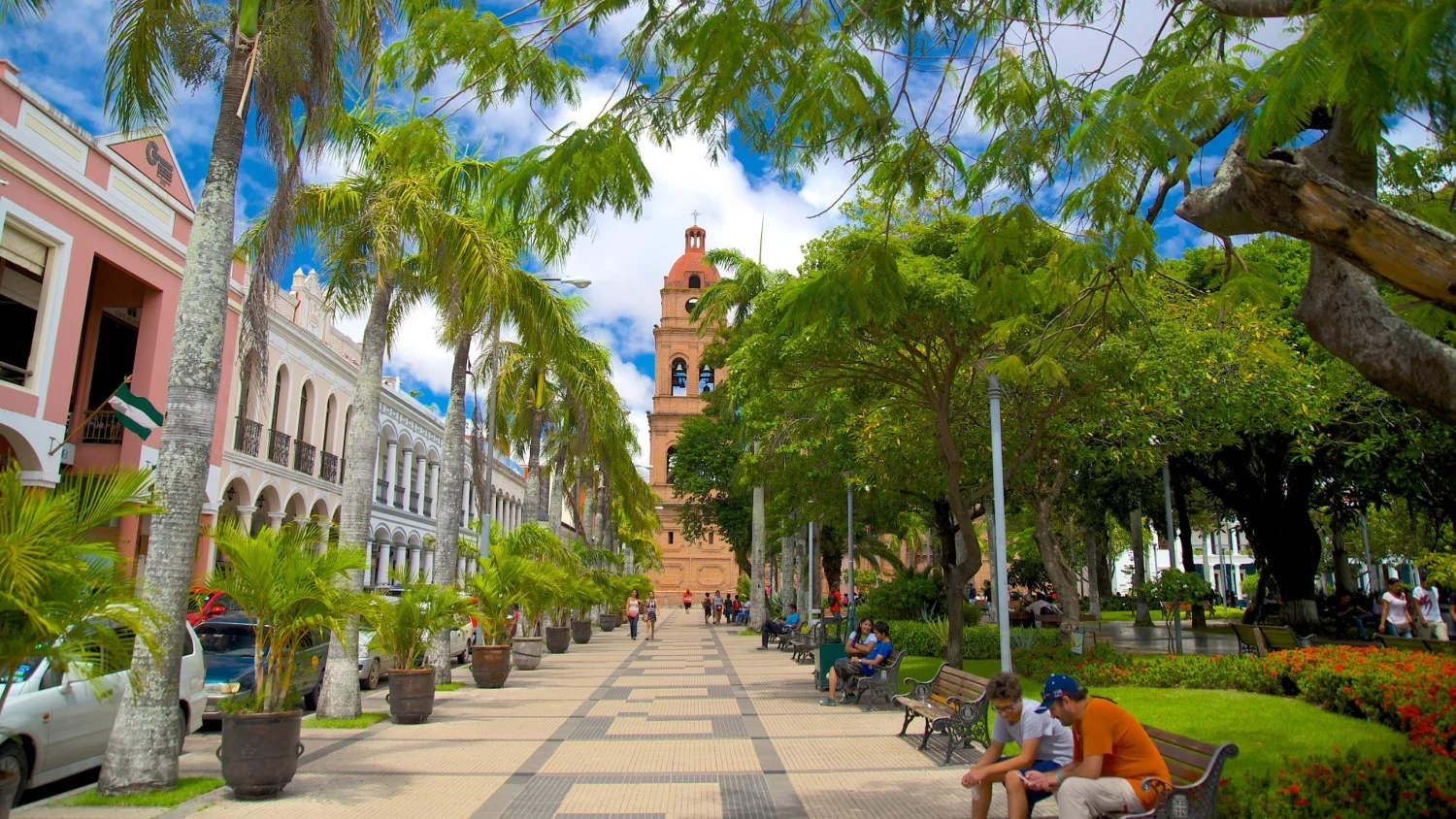
In Santa Cruz specifically, USDT is widely used for everyday value storage and conversion. People convert USDT to bolivianos through bank channels, P2P networks, and exchange services. It is functional, not experimental. About 86% of crypto transactions in Bolivia come from individual users, which tells you this is grassroots adoption, not a corporate initiative.
If you want your banking and crypto in the same ecosystem, Bolivia is ahead. If you prefer to keep them completely separate, Paraguay works fine.
Cost of Living
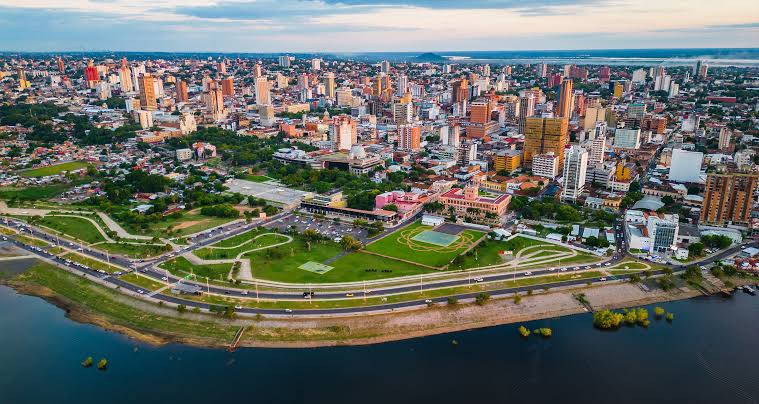
Paraguay (Asuncion). A single person can live comfortably on $1,000 to $1,500 per month. Rent for a furnished one-bedroom in Villa Morra runs $500 to $800. The city is more developed than Santa Cruz, with better restaurants, more modern apartment buildings, and a slightly larger expat community.
Bolivia (Santa Cruz). A single person can live comfortably on $1,000 to $1,500 per month. Rent for a furnished one-bedroom in Equipetrol (the main expat neighborhood) runs $300 to $500. Everything is slightly cheaper than Asuncion, but the city is less polished.
Daily costs are comparable. Bolivia has a small edge on rent. Paraguay has a small edge on infrastructure and convenience. Neither is expensive by any international standard.
Safety and Stability
Paraguay. Level 1 US travel advisory. One of the safest countries in South America. Politically stable. Asuncion is a calm, mid-sized city.
Bolivia. Level 2 US travel advisory. Generally safe in the main cities (Santa Cruz, Cochabamba), but Bolivia has had more political instability historically. An attempted coup was reported in 2024. The current government is stable but Bolivia’s political history is more volatile than Paraguay’s.
For safety and stability, Paraguay has the edge.
Trying to decide between Paraguay and Bolivia for crypto? We get clients residency in both countries, working directly with our lawyer teams in Asuncion and Santa Cruz. Reach out to us here.
The Bottom Line
If you asked this question two years ago, the answer was straightforward. Paraguay offered territorial tax, fast residency, no CRS, and a functional if unexciting base for crypto holders. Bolivia was the country that had literally banned crypto.
In 2026, the picture has reversed on the crypto-specific factors. Bolivia legalized crypto and integrated it into the banking system. Paraguay introduced a detailed domestic wallet return and is listed for CRS exchanges from 2027. Bolivia remains outside CRS and CARF, with reporting through banks and regulated providers.
Pick Paraguay if you prioritize political stability, you want a more flexible base for travel, you do not mind filing the wallet-level reports, or you want to hold your crypto outside the banking system in personal wallets. Those wallets are still covered by the reporting rule.
Pick Bolivia if crypto privacy is your top priority, you want banking with integrated USDT wallets, you want the cheapest residency process in the region, you want a jurisdiction outside CRS and CARF, or you are comfortable with a slightly less stable political environment.
Bolivia’s travel trade-off is 90 total days outside the country per year during temporary residence, counting all trips. Longer absences require express authorization.
Consider both. Paraguay residency for the political stability and the established expat infrastructure. Bolivia residency for the crypto privacy and banking integration. Neither process is expensive or time-consuming, and holding residency in both countries is a legitimate multi-flag strategy.
We get clients residency in both Paraguay and Bolivia, working directly with our lawyer teams in Asuncion and Santa Cruz. Reach out to us here to get started.