Bolivia vs Paraguay Residency: Which One Fits You (2026)
These are the two cheapest, fastest residencies in South America, and I get clients into both. Bolivia from Santa Cruz, where I live, and Paraguay through our team in Asuncion.
People usually ask which one is better. That’s the wrong question, and it’s why most comparison articles are useless. The countries are not competing for the same person. One of them is built for someone who is actually moving. The other is built for someone who wants a legal foothold and a plane ticket home.
Answer that question about yourself and the rest of this decides itself.
The Short Version
Bolivia is cheaper, dramatically faster, and normally avoids apostilled home-country documents on our standard first-year independent-work route. In exchange, it expects you to actually be in Bolivia. Absences total up to 90 days per year while you’re a temporary resident, unless Migración expressly authorizes more.
Paraguay costs more, takes months instead of weeks, and demands apostilled documents you have to arrange before you fly. In exchange, it barely cares whether you show up. Keep absences under one year while temporary and three years once permanent, unless Migraciones authorizes longer.
Bolivia is a place to live. Paraguay is a place to hold. That’s the whole comparison in two lines.
Side by Side
| Bolivia | Paraguay | |
|---|---|---|
| Cost, handled | $1,800 end to end for our one-year package | $1,500 to $2,500 guided, $3,500 to $4,000 white glove |
| Government fees | $195 to $250 one-year filing estimate (August 2026) | Gs. 2,926,925 filing + Gs. 234,154 residence certificate (October 2026, cash) |
| Home-country documents | Normally no apostilles for our standard first-year route; other cases differ | Apostilled birth certificate and criminal check, translated |
| Residency approval | About one week through our team | Planning estimate: two to four months after filing |
| Later ID-card stage | Cedula pickup within two weeks of approval | Separate cedula stage; plan collection in person |
| Temporary term | Standard route: one year; longer terms depend on category and evidence | Standard route: up to two years, renewable |
| Absence limit, temporary | 90 total days per year without express authorization | Avoid an unjustified absence over one year |
| Absence limit, permanent | Two continuous years without express authorization | Avoid an unjustified absence over three years |
| Permanent eligibility | After three years temporary | File between month 21 and 24 |
| Naturalization eligibility | More than three years; two for qualifying family route | Three years from permanent approval, about five total; application still required |
| Genuine foreign-source income | Not taxed; work performed in Bolivia can be local-source | Not taxed; work performed in Paraguay can be local-source |
| Personal income tax | RC-IVA 13% where applicable | IRP 8 to 10% for personal services |
| Tax residency certificate | No standard route | RUC plus monthly filings |
| Crypto reporting | Bank compliance and activity-specific duties | Wallet-level return for covered persons under Resolution 47 |
| US travel advisory | Level 2 | Level 1 |
| Rent, one bedroom in expat area | $300 to $500 (Equipetrol) | $500 to $800 (Villa Morra) |
Documents: The Biggest Practical Difference
This is where the two processes diverge hardest, and it’s the part people underestimate.
Our standard first-year Bolivia route normally avoids apostilled home-country documents. No apostilled birth certificate. No FBI background check. Nothing mailed, nothing notarized in your home state, no flight back to sort out paperwork. Your criminal check is done at INTERPOL in Santa Cruz, your domestic check (REJAP) is done here, your medical exam is done at an approved clinic here, and your proof of address includes a hand-drawn map of your house. For this route, our team uses three months of bank statements showing an average running balance of about $700. Your existing account abroad is fine.
Bring your passport, bank statements, and evidence of your work. Family records and later citizenship applications are a different story.
Paraguay requires an apostilled birth certificate and an apostilled criminal background check, both translated into Spanish by a certified translator, both arranged in the country that issued them. Arrange them through the issuing country before filing; mail or a representative may work without traveling home. Use the long-form birth certificate, not the abbreviated one, because the short version gets rejected. Then there are the local pieces: an INTERPOL certificate that needs authenticating at two separate offices, and a Certificado de Vida y Residencia that needs three.
I wrote the full document list in my Paraguay cedula guide, and the number one reason people’s files stall is showing up without apostilles. Budget four to eight weeks of home-country prep before Paraguay starts.
Time and Money
Bolivia: our one-year residency package is $1,800 end to end, with all government and legal fees included. The residency process takes about a week of active work on the ground, or one or two days with a few weeks of advance notice. Your temporary residency gets approved and stamped in your passport when you present at DIGEMIG, and the cedula is ready to pick up within two weeks. DIY costs less in fees but can take a month or two of your life, and I don’t recommend it unless your Spanish is solid. The full cost breakdown is here.
Paraguay: the current filing and residence-certificate fees total Gs. 3,161,079 in cash, with cedula and police checks separate. Guided service lands at $1,500 to $2,500, and full white glove is $3,500 to $4,000. That number has held steady across every file I’ve sent for two years. Residency approval takes two to four months after submission, then the cedula phase adds a few weeks. Total is four to five months, and since 2024 you can’t start the cedula until residency is approved and you have to collect it in person. Plan on two trips, or one long stay. The line-by-line Paraguay costs are here.
So our Bolivia package is roughly half the white-glove Paraguay price, with approval in about a week instead of months. If cost and speed were the only variables, this article would be over.
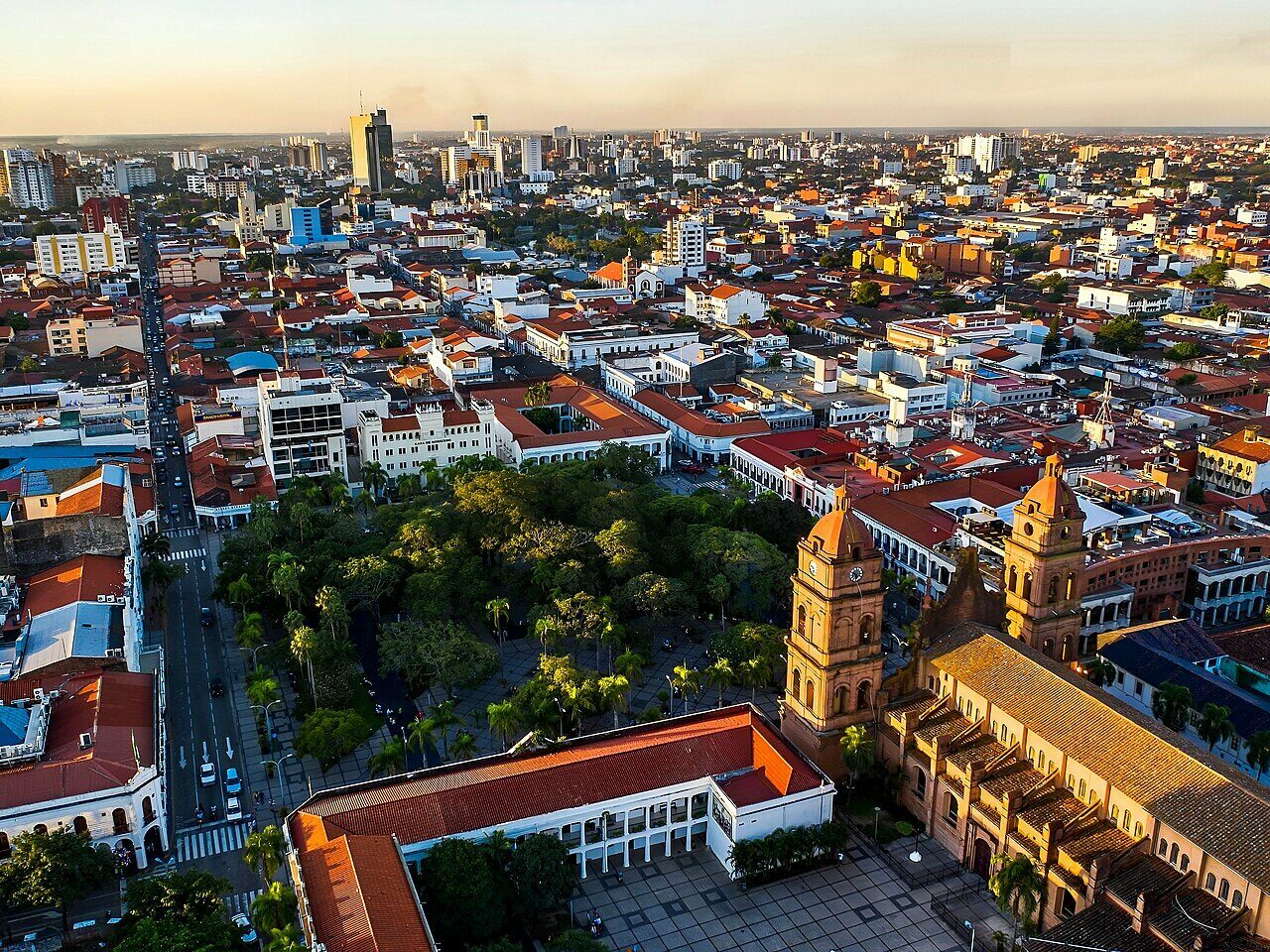 Santa Cruz de la Sierra, where the Bolivia process runs.
Absence Rules: Where Paraguay Earns Its Price
Here’s where Paraguay earns its price.
Bolivia caps you at 90 total days outside the country per year as a temporary resident, counting separate trips, unless Migración expressly authorizes more. Blow past it without authorization and you can lose your residency and have to start over. Migración can authorize an extension to 180 days. It is not immediate and not automatic: you need to be settled into your residency and bring a real business justification. It is very achievable when handled properly, but treat it as a second step rather than something you file on day one. Once you reach permanent residency, the rule relaxes to two continuous years away without authorization. The cedula still needs renewal.
In my first year here I spent about 50 days outside Bolivia between work trips and visits back to the US. Staying under the line was never something I thought about. But I live here. If you don’t, this rule is a trap.
Paraguay gives you up to a year away as a temporary resident, and three years once permanent. Longer absences need authorization under Law 6984. That is one of the loosest maintenance requirements on earth. You can base yourself elsewhere and return periodically to keep the residency active. Citizenship, on the other hand, requires genuine residence.
If you want a residency you hold rather than live in, Paraguay is the only one of these two that works. Bolivia will quietly expire on you.
I send out occasional residency updates, rule changes, new pathways, and what I’m seeing on the ground across the Southern Cone. Residency-only, no spam or fluff.
Getting to Permanent Residency in Each Country
Paraguay puts permanent residency two years out. Bolivia’s standard work route takes three, and there are two ways to run those three years.
You can file the self-solvency route as an independent worker and renew it one year at a time until you hit three. Or you file self-solvency for the first year, then register your own unipersonal business and obtain its NIT, the tax identification number, and use the business and evidence of its activity for a two-year residency covering years two and three. A genuine employer can also support that two-year renewal.
You will see practices in Santa Cruz offering a two or three year residency right at the start. That is not the self-solvency route. It is a work-contract visa that needs a company to sponsor you, and I do not recommend it. The two paths above involve no invented employment.
Paraguay’s standard temporary route lasts up to two years. Your normal conversion window is the three months before expiry. Under the standard Law 6984 route, you can still convert up to one month late with a fine; after that, only a temporary extension is available, up to six months after expiry. Resolution 407/2026’s official checklist requires evidence of actual income or resources. A university degree alone no longer works. Independent workers need taxpayer registration, three months of IVA declarations or the prior year’s IRP, and tax-compliance evidence showing activity. Remote workers have a separate employment-and-income checklist; foreign documents need legalization or apostille and Spanish translation. I covered the new rules and the traps in the Paraguay conversion guide.
Once you’re through, Paraguay’s permanent card is valid for 10 years and the status doesn’t expire.
Citizenship Eligibility: Bolivia After Three Years, Paraguay Around Five
Both countries have residence periods before you can apply for naturalization, but those periods start at different points.
Bolivia: more than three years of uninterrupted legal residency before applying, a written exam on Bolivian history, and Spanish. If you’re married to a Bolivian or have Bolivian children, it drops to two years under DS 1923 as amended by DS 4828, which I broke down in the marriage pathway guide. Uninterrupted is the operative word. Long absences break the clock.
Paraguay: the Supreme Court checklist counts three years from the permanent-admission resolution, not from original temporary approval. That’s the detail the passport-marketing sites bury. Add the two temporary years and you’re realistically five years in, and Paraguayan courts increasingly want to see genuine habitual residence rather than a cedula and a few stamps. There’s an exam at the Supreme Court level and processing that runs six to twelve months or more.
So if a passport is the actual goal, Bolivia gets you to the application stage faster, and the residency that feeds it is cheaper. Paraguay’s dual-nationality rules depend on reciprocity treaties, and naturalized citizens can lose nationality after an unjustified absence of more than three years or voluntarily acquiring another nationality. The catch is that Bolivia’s absence rules mean you have to earn it by living here. Which is consistent: Bolivia gives you the fast lane only if you’re really doing it.
Taxes: Same System, Different Use
Both countries run territorial tax systems. Genuine foreign-source income is not taxed in either one; work performed locally can still be taxable even when the client is abroad. OECD lists Paraguay for CRS exchanges from 2027; neither country appears in the September 2026 CARF commitment list.
Bolivia taxes local income at 13% under RC-IVA where that tax applies. Remote work performed here can be Bolivian-source even with a foreign client.
Paraguay taxes local income at 8 to 10%, has no wealth or inheritance tax, and has one meaningful advantage: the paperwork exists to prove it. You can register a RUC, file monthly through Marangatu, and obtain a formal tax residency certificate to show another country’s tax authority. That certificate is the product. If you’re exiting a high-tax country and expect to be asked where you’re tax resident now, Paraguay gives you a document. My territorial tax guide covers the setup.
The tradeoff is that a RUC means monthly filings forever, including zero returns. Skip them and you build up penalties that surface when you finally need the certificate.
Crypto is the one area where the gap is wide in Bolivia’s favor, since Paraguay now mandates wallet-level reporting under Resolution 47 while Bolivia’s banks and regulated providers handle their own reporting. I compared them in detail in Bolivia vs Paraguay for crypto and privacy.
Living in Santa Cruz vs Asuncion
Costs are close. Santa Cruz and Asuncion both run $1,000 to $1,500 a month for a comfortable single person. Rent separates them: a good one-bedroom in Equipetrol is $300 to $500, while Villa Morra in Asuncion runs $500 to $800.
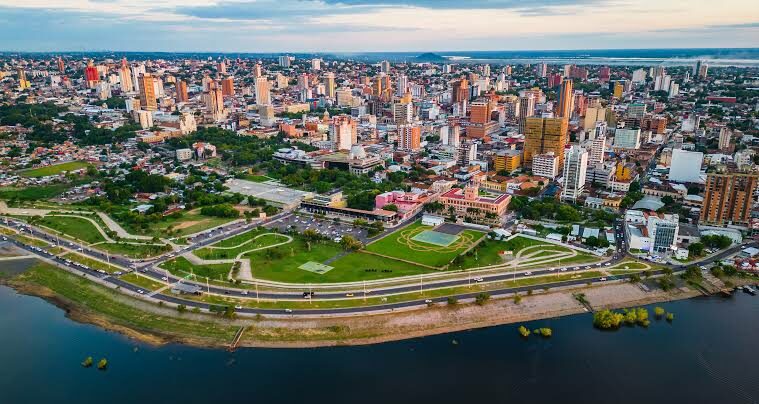 Asuncion along the Costanera, where the Paraguay process runs.
Asuncion is more polished. Better restaurants, more modern buildings, a larger expat community, and better infrastructure generally. Santa Cruz is cheaper, more tropical, and less built for foreigners, which some people consider the point.
On safety, Paraguay holds a Level 1 US travel advisory, the lowest in South America. Bolivia sits at Level 2, alongside France and Brazil, with a separate warning for Chapare Province, which some intercity routes enter. I wrote the honest version for both: Paraguay here and Bolivia here. Paraguay is calmer politically. Bolivia has road blockades and a more turbulent political history, and that’s a real difference, not a media artifact.
Who Each One Is For
Choose Bolivia if you’re actually relocating, you want the cheapest and fastest legal status in the region, you don’t want to deal with apostilles or a trip home for documents, you want the shorter citizenship clock, or you’re a crypto holder who values the reporting environment.
Choose Paraguay if you want a Plan B you can hold from anywhere, you travel more than 90 days a year, you need a documented tax residency certificate for another government, or you want the political stability and the better-developed expat infrastructure.
Do both if the budget allows, because they’re complementary rather than redundant. Paraguay as the low-maintenance flag that survives whatever your travel looks like, Bolivia as the place you actually live and the faster path to a passport. Combined, our $1,800 Bolivia package and a $3,500 to $4,000 white-glove Paraguay service put the service budget around $5,300 to $5,800 for two legal footholds on the continent. That’s cheap for what it buys.
The mistake I see most often is someone picking Paraguay because it’s the one they read about, then never visiting, then getting surprised at month 21 when the conversion rules ask them to prove real economic activity. And the mirror image: someone picking Bolivia for the price, then spending five months a year traveling and losing it.
Pick based on where your body is going to be. Everything else follows.
We run residency in both countries, with our legal team in Santa Cruz and our team in Asuncion. If you’re weighing the two, reach out here and we’ll tell you honestly which one fits your situation, including when the answer is neither.