Is Bolivia Safe for Americans? An Honest 2026 Guide
Advisory and health guidance checked: October 9, 2026
I am an American living in Santa Cruz, Bolivia. I walk to restaurants, use ride apps, go out at night, and live a pretty normal city life here.
So, is Bolivia safe for Americans? For most visitors and expats, yes. Bolivia has one of the lower homicide rates in Latin America. The more common risks are phone theft, bag theft, taxi scams, road accidents, and travel delays caused by protests or roadblocks.
That does not mean every part of the country is equally safe, or that you can ignore the current political situation. It means the usual picture of Bolivia as a generally violent country is not supported by the homicide data or by daily life in the parts of Santa Cruz where most foreigners spend their time.
The Short Answer
Bolivia is generally safe for Americans who use normal city precautions.
The main things to know are:
- Bolivia’s homicide rate is low by Latin American standards.
- Petty theft is more common than violent crime against visitors.
- Santa Cruz is comfortable for day-to-day life, but you should use a ride app and pay attention to your phone and bag.
- Chapare has a separate U.S. “Do Not Travel” warning because of narcotrafficking-related crime.
- The August 18, 2026 advisory no longer lists a separate Level 3 warning for La Paz, but unrest and roadblocks remain a countrywide concern.
- Road conditions, blockades, altitude, and mosquito-borne illness can matter more to a trip than crime.
What the U.S. Government Says Right Now
As of its August 18, 2026 travel advisory, the U.S. State Department rates Bolivia at Level 2, “Exercise Increased Caution,” because of crime, unrest, and health concerns.
There is one separately listed regional warning:
- Chapare Province: Level 4, “Do Not Travel,” because violent crime connected to narcotrafficking is higher and the U.S. government has limited ability to provide emergency help.
La Paz’s earlier separate Level 3 warning is absent from this edition. That does not mean roadblocks or demonstrations have stopped affecting travel and essential services.
Those details matter more than the national number. The current advisory does not place Santa Cruz under that regional warning.
Chapare is not the same thing as Cochabamba city. It is a tropical province north of the city, centered around places such as Villa Tunari. Some travelers do pass through it, so this is not a warning to dismiss. If a route enters Chapare, check it before going.
Travel advisories also change. Read the current advisory instead of relying on a screenshot or an old travel blog.
Bolivia’s Homicide Rate Is Low for the Region
Homicide is not a complete measure of safety, but it is one of the few serious crimes that can be compared across countries with some consistency.
The Organization of American States reports 541 intentional-homicide victims in Bolivia in 2023, a rate of 4.42 per 100,000 people. In its review of 2024, InSight Crime estimated Bolivia’s homicide rate at 3 per 100,000. Its estimated regional average for Latin America and the Caribbean that year was about 20 per 100,000.
The 2024 Bolivia figure needs a note. InSight Crime based it on data available through September rather than a complete final-year dataset. Its 2025 homicide review did not publish a comparable rate for Bolivia because final official data were not available. The report also noted an increase in a broad category called “crimes against life,” especially in Santa Cruz, but warned that this category includes more than confirmed homicides and could not be compared directly with prior homicide rates.
The fair conclusion is not that Bolivia has no violent crime. It is that the latest comparable data place its level of lethal violence well below much of Latin America. That is a more accurate picture than the idea that Bolivia is broadly dangerous because it is poor, politically noisy, or associated with coca production.
For context, the FBI reported a U.S. murder rate of 5.0 per 100,000 in 2024. The datasets and legal definitions are not identical, so this is not a perfect country ranking. It does show that Bolivia’s recent homicide figures are in a range Americans already live with at home.
What Safety Feels Like in Santa Cruz
Santa Cruz is where I live, and the gap between the headlines and normal life is large.
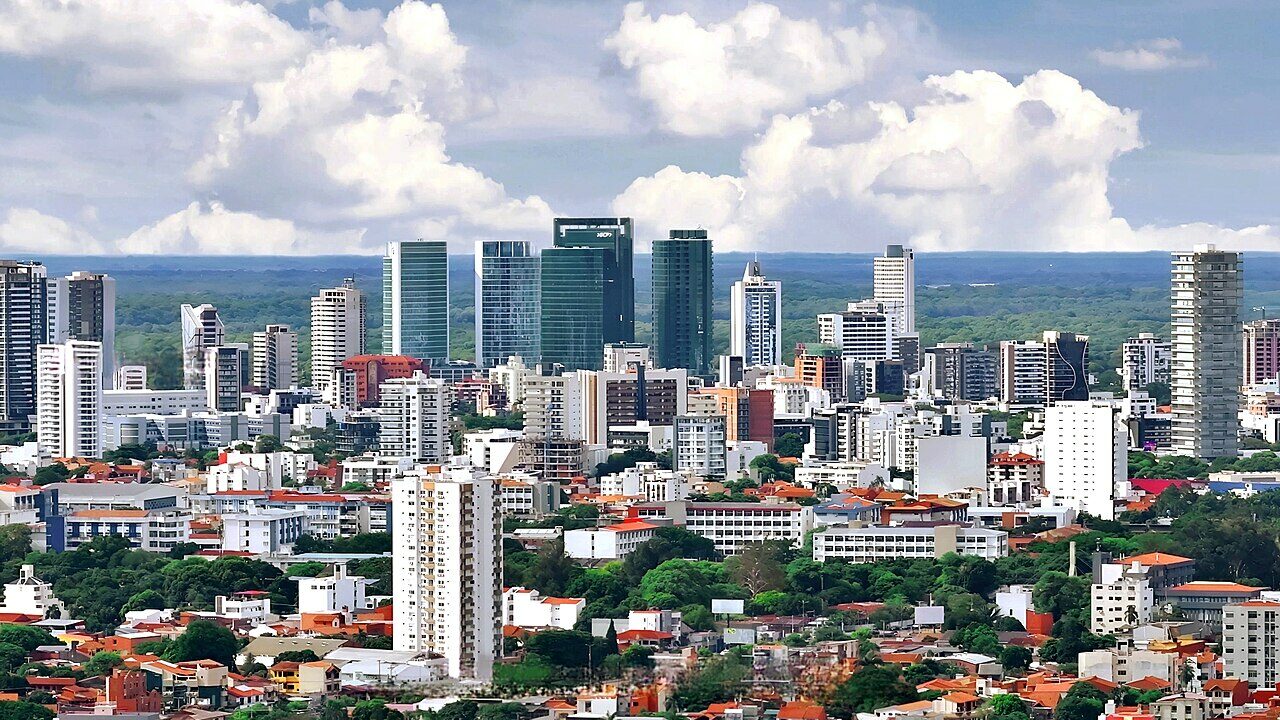
In Equipetrol, Sirari, and the busier parts of the north side, people eat out late, meet friends, walk dogs, use the parks, and move around without treating the city like a danger zone. Modern apartments, restaurants, supermarkets, clinics, and malls are close together. This is the version of Santa Cruz most new expats see first.
That personal experience does not replace crime data. The useful recent local number is from Bolivia’s official citizen-security observatory. It found that reports of “high social impact” crime across Santa Cruz Department fell 2.2 percent in the first half of 2025, from 14,312 to 13,997. Reports of domestic violence and human trafficking also fell, while reported offenses against life and property increased. In other words, the overall trend was slightly better, but not every category improved.
Santa Cruz also records a large share of Bolivia’s total reported crime. That is not surprising given that it is the country’s largest department by population and its main commercial center, but it is a reason not to call the city crime-free.
My practical view is simple: Santa Cruz is a livable city where normal precautions are usually enough. I would not walk around holding an expensive phone near traffic, take an unmarked cab from the street, or wander alone through an unfamiliar outer neighborhood late at night. I would use the same judgment in a U.S. or Latin American city I did not know well.
For a closer look at where foreigners tend to live, see my guide to the best neighborhoods in Santa Cruz.
The Risks Americans Are More Likely to Notice
Phone and bag theft
Petty theft is common in crowded markets, bus terminals, festivals, and tourist areas. Keep your phone away from the street side of the sidewalk, close your bag, and do not leave it hanging from a chair.
Bolivia’s 2023 national victimization study found that robbery was the property crime affecting people most often. That fits the practical advice from both U.S. and British travel authorities.
Taxis and express kidnapping
Use a ride app or a registered radio taxi. In Santa Cruz, Yango and inDrive are widely used. Check the car and driver before getting in, and share the trip when traveling alone.
The U.S. advisory says express kidnapping does not happen often, but that reported cases occur mostly in Santa Cruz. The British travel guidance for Bolivia also warns about robberies involving taxis in Santa Cruz, La Paz, and Rurrenabaque. This is a real risk with a simple way to reduce it: do not get into a random unmarked taxi.
Fake police and document scams
Thieves sometimes pose as police officers and ask to inspect a traveler’s documents, wallet, or bag. British guidance notes that police cannot search you on the street without a written order from a state prosecutor. Do not get into an unmarked “police” vehicle. Ask to go to a real police station and call the Tourist Police if something feels wrong.
Domestic and sexual violence
A low national homicide rate does not mean all violence is low. Bolivia has a serious problem with domestic and sexual violence, and women face risks that a male expat’s daily experience may not capture. That belongs in an honest safety article even if the main audience is short-term American visitors.
The Political Situation
The political backdrop is real and I am not going to soften it. Bolivia’s new government took office in November 2025, ending twenty years of MAS rule, and the reforms since have been painful. Fuel prices rose sharply in December, and diesel subsidies were removed in September 2026. Inflation closed 2025 above 20 percent. In May and June of 2026 the country saw close to two months of blockades, La Paz spent weeks effectively cut off, and several people died. Transport unions and market traders have said they will be back in the streets from October.
Here is the part that gets left out of every article written about this from a distance: my own day-to-day experience in Santa Cruz has been much calmer than the disruption reported in La Paz. La Paz is the seat of government, it is where the miners and the unions march, and it sits in a bowl with a handful of access roads, which makes it straightforward to strangle. Santa Cruz is a thousand kilometers away, it is the country’s economic engine rather than its political stage, and it sits on flat open ground with multiple highways running in. When La Paz shuts down, I read about it. That is the pattern and it has held every time in the years I have lived here.
So the honest version is this. Bolivia has real political turbulence, and it is not confined to one city. If you are moving to La Paz, budget for periodic disruption to travel and goods as a normal cost of living there. In Santa Cruz, I have often felt it through slower deliveries and higher prices. The current US advisory warns that demonstrations and roadblocks can disrupt transport and essential supplies throughout Bolivia, including access to airports. Check road status before intercity travel, don’t book tight bus connections, and keep a few days of flexibility. That is the entire adaptation.
The Bigger Travel Problem Is Often the Road
Bolivia’s roadblocks, or bloqueos, can close intercity routes with little warning. They may interrupt buses, fuel deliveries, food supplies, and access to medical care. They are often a bigger practical issue for a traveler than street crime.
The situation became serious in May and June 2026. The government declared a state of emergency while security forces cleared major highways. By June 23, the Bolivian highway authority said the main national road network was open, with special restrictions at five points. Conditions can change again quickly.
Before any long-distance road trip, check the official ABC road-transit map and ask the bus company or driver whether the route is operating. Do not try to cross a roadblock on your own. Avoid demonstrations, even when they appear calm.
Road crashes are another real concern. Bolivia recorded 18,304 traffic incidents and 1,748 deaths in 2024, according to figures compiled by the national citizen-security observatory. Choose a reputable tour operator, avoid overnight mountain buses when a daytime option exists, wear a seatbelt when one is available, and do not accept a driver who has been drinking.
City by City
Santa Cruz
For many Americans considering a move, Santa Cruz is the easiest place to start. It is lower, warmer, more spread out, and less affected by altitude. The better-known central and northern neighborhoods feel comfortable, but petty theft and taxi-related robbery still deserve attention. Use ride apps at night and learn which areas are unfamiliar before walking around.
La Paz
La Paz normally requires more street awareness because it has dense crowds, major markets, and more tourist-targeted scams. Right now, the bigger issue is unrest. The August 18, 2026 US advisory no longer lists a separate Level 3 warning for La Paz, but roadblocks can still disrupt essential services. Check the current advisory before booking.
This is also where Bolivia’s blockades concentrate. La Paz sits in a bowl with a handful of access roads and is the seat of government, which makes it the easiest city in the country to cut off. If you base yourself here, factor in the risk of interrupted travel and deliveries when the unions are in the streets.
Altitude is also a real health issue. La Paz sits at about 3,600 meters. Plan a slow first day, stay hydrated, avoid heavy drinking, and seek medical help if symptoms become severe.
Cochabamba
Cochabamba city is not Chapare. It is a pleasant mid-altitude city, but road travel north and east can approach the separately warned Chapare area. Confirm the exact route rather than treating the whole department as either safe or unsafe.
Sucre, Uyuni, and Lake Titicaca
On the main tourist circuit, the practical concerns are theft from bags, unreliable transport, altitude, and operator quality. For Uyuni tours, pay for a well-reviewed company with maintained vehicles and drivers who do not drink. On buses, keep your passport and money on your body rather than in the overhead rack.
Health in Santa Cruz and the Lowlands
Santa Cruz had a significant chikungunya outbreak in 2026. Bolivia’s Health Ministry reported on March 10, 2026 that most reported national cases were in Santa Cruz. The CDC’s current Bolivia page, checked October 9, emphasizes mosquito-bite prevention and lists dengue and measles notices.
Use mosquito repellent, especially during the rainy season, and remove standing water around a home. Ask a travel-health clinician about yellow fever vaccination if you will visit tropical areas. Medical care is more limited outside major cities, so insurance with medical evacuation coverage is worth considering.
So, Is Bolivia Safe for Americans?
Yes, for most Americans who use reasonable precautions and check current conditions.
Bolivia’s recent homicide rate is low by regional standards. Santa Cruz is not free of crime, but normal life in areas such as Equipetrol and Sirari feels much more ordinary than many online safety pages suggest. The most useful precautions are straightforward: use a ride app, keep your phone secure, avoid demonstrations, check road conditions, choose transport carefully, and follow the specific warning for Chapare.
If you are looking at Bolivia as a place to live, the next questions are usually practical ones. You can read my guides to the cost of living in Santa Cruz, Bolivian residency, and moving to Bolivia as an American.
If you want to talk through a move with someone who lives in Santa Cruz, you can contact me here.